
NHTSA ID Number: 10219277
Manufacturer Communication Number: 03-06-01-023F
Summary
This service bulletin explains how to measure for oil consumption and possible reasons for loss of oil.
Information on Engine Oil Consumption Guidelines
All engines require oil to lubricate and protect the load bearing and internal moving parts from wear including cylinder walls, pistons and piston rings. When a piston moves down its cylinder, a thin film of oil is left on the cylinder wall. During the combustion process, part of this oil layer is consumed. As a result, varying rates of oil consumption are accepted as normal in all engines.
263 Affected Products
Vehicles
| MAKE | MODEL | YEAR |
| CHEVROLET | SILVERADO 3500 | 2022 |
| CHEVROLET | SILVERADO 3500 HD | 2000-2001 |
| CHEVROLET | SUBURBAN | 2000-2019 |
| CHEVROLET | SUBURBAN 1500 | 2000-2011 |
| CHEVROLET | SUBURBAN 2500 | 2000-2006, 2008-2011 |
| GMC | C SERIES | 2003-2009 |
| GMC | C4500 | 2003-2009 |
| GMC | C5500 | 2003-2009 |
| GMC | SAVANA | 2000-2022 |
| GMC | SAVANA 1500 | 2000-2017 |
| GMC | SAVANA 2500 | 2000-2018 |
| GMC | SAVANA 3500 | 2000-2018 |
| GMC | SIERRA 1500 | 2000-2022 |
| GMC | SIERRA 1500 HD | 2001-2005 |
| GMC | SIERRA 2500 | 2000-2022 |
| GMC | SIERRA 2500 HD | 2001-2005 |
| GMC | SIERRA 3500 | 2000-2022 |
| GMC | SIERRA 3500 HD | 2000-2001 |
| GMC | SIERRA DENALI | 2002-2003, 2007-2020 |
| GMC | YUKON XL | 2000-2019 |
1 Associated Document
Manufacturer Communications
Bulletin No.: 03-06-01-023F
Date: September, 2022
NHTSA ID Number: 10114315
Manufacturer Communication Number: 03-06-01-023B
Summary
This information bulletin explains how to measure for oil consumpsion and possible reasons for loss of oil.
1 Associated Document
Manufacturer Communications
Bulletin No.: 03-06-01-023B
Date: November, 2014
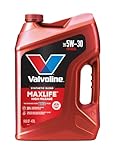
- Formulated for engines with 75,000 miles or more, Valvoline MaxLife High Mileage synthetic blend is formulated with seal conditioners to help prevent oil leaks and reduce oil consumption
- Delivers 20% better wear protection and 15% better sludge defense than industry standards to help prevent engine breakdown
- Extra detergents safeguard against friction, corrosion and deposits to keep high-mileage engines clean
- Advanced friction-fighting additives help maximize performance and improve fuel efficiency
- Provides performance benefits for high mileage, new and re-built engines alike


- Phosphorus Replacement Technology helps extend emission system life
- Superior dispersancy that fights sludge build up
- Exceptional oil burn-off protection exceeding industry standards* | Seal conditioners to help reduce leaks
- Advanced additives that help prevent engine wear | Improved Fuel Economy**
- Meets or exceeds the following specifications: API SP/SN PLUS/SN/SM | ILSAC GF-6 | Meets Ford WSS-M2C946-B1 | Meets Ford WSS-M2C961-A1 | * Based on API and ACEA volatility specifications | ** In 5W-20, 5W-30 and 10W-30 grades versus industry specifications

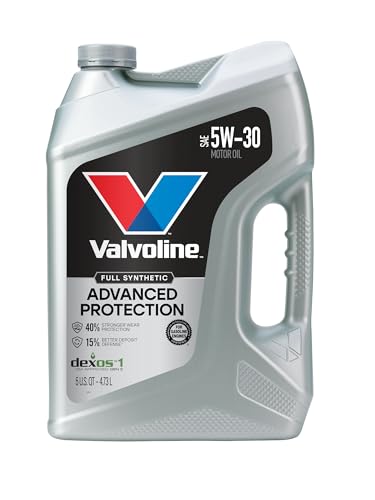
- Advanced protection against the four main causes of engine breakdown: wear friction heat and deposits
- Delivers 40% stronger wear protection than industry standards to reduce friction and improve fuel economy
- Provides 15% better deposit defense vs. industry standards, keeping engines cleaner for smoother performance and longer-lasting protection
- Up to 2.5X better heat protection vs. industry standards to fight harmful sludge formation and thermal breakdown
- Engineered for excellent low-temperature flow, reducing metal-to-metal contact during cold starts — when most engine wear typically occurs
SEOCONTENT-START
Copyright 2022 General Motors LLC. All Rights Reserved. Service Bulletin Bulletin No.: 03-06-01-023F Date: September, 2022 INFORMATION Subject: Higher Than Expected Oil Consumption at 8600 GVW and Above Models: 2020–2022 Chevrolet Silverado 2500HD/3500HD with 6.6L RPO (L8T) 2000–2019 Chevrolet Silverado, 2500/3500, Suburban 2000–2022 Chevrolet Express 2002–2013 Chevrolet Avalanche 2003–2010 Chevrolet Kodiak C4500-C5500 Series Models 2020–2022 GMC Sierra 2500HD/3500HD 6.6L RPO (L8T) 2000–2019 GMC Sierra, 2500/3500, Yukon XL 2000–2022 GMC Savana 2003–2010 GMC TopKick C4500-C5500 Series Models 2003–2010 HUMMER H2 with Gasoline Engine and Rated at 8600 GVW and above This bulletin has been revised to add the 2020–2022 Model Years to Chevrolet Express and GMC Savana vans. Please discard Corporate Bulletin Number 03-06-01-023E. Information on Engine Oil Consumption Guidelines All engines require oil to lubricate and protect the load bearing and internal moving parts from wear including cylinder walls, pistons and piston rings. When a piston moves down its cylinder, a thin film of oil is left on the cylinder wall. During the combustion process, part of this oil layer is consumed. As a result, varying rates of oil consumption are accepted as normal in all engines. Oil Consumption Oil usage has a direct relationship with the amount of fuel used. The harder an engine works, the more fuel and oil it will use. Therefore, oil usage as a factor of fuel usage is a more accurate indicator of acceptable oil consumption levels than vehicle mileage for vehicles at or above 8600 GVW. The accepted rate of oil consumption for gasoline engines in vehicles at or above 8600 GVW is 0.946 liter (1 qt) within 379 liters (100 gallons) of fuel used. This rate only applies to vehicles under warranty, maintained in accordance with the appropriate maintenance schedule, driven at legal speeds and within design intent of the vehicle. Many factors can affect an owner’s concern with oil consumption. Driving habits and vehicle maintenance vary from owner to owner. Thoroughly evaluate each case before deciding whether the vehicle in question has abnormal engine oil consumption. Gasket and External Leaks Inspect the oil pans, engine covers, and the engine oil cooler for leakage. Inspect for oil leakage into the engine coolant. Improper Reading of the Oil Level Indicator (Dipstick) The vehicle must be parked on a level surface to obtain accurate oil level readings. Verify that the dipstick tube is fully seated in the block. When checking the oil level, make sure the dipstick is wiped clean before taking an oil level reading and fully depress the dipstick until the shoulder bottoms out on the dipstick tube. The dipstick should be the proper part number for the engine/vehicle that is being checked. Not Waiting Long Enough After Running Engine to Check Oil Level The vehicle should be allowed to sit for at least 15 minutes, after the engine has been shut off, before taking an oil level reading to assure the oil has had enough time to drain back into the crankcase. In order to ensure accurate results, the temperature of the oil should be close to the same temperature as the last time the oil level was checked. Page 2 September, 2022 Bulletin No.: 03-06-01-023F Improper Oil Fill After an Oil Change Following an oil change, verify that the proper amount and type of oil was put in the engine and that the oil level on the dipstick is not above the full mark or below the add marks. Refer to the Owner’s Manual or Service Manual for information on recommended oil quantity, viscosity, and quality. High Speed or High RPM Driving Continuous driving at high speeds/high RPMs may increase oil consumption. Because this may not always be an everyday occurrence, it is hard to determine exactly how much the oil economy will be affected. Towing or Heavy Usage Towing a trailer or hauling additional weight will increase oil consumption. Large frontal area trailers will further increase the work required from the engine, especially at highway speeds, and thus increases the rate of oil consumption. PTO Operation Operation of a PTO will increase fuel and oil usage, as the PTO driven accessory uses engine power to operate. Crankcase Ventilation System Verify that the positive crankcase ventilation (PCV) system is operating properly. Blockages, restrictions or damage to the PCV system can result in increased oil use. Oil Dilution from Condensation On vehicles that are usually driven short distances, less than 8 km (5 mi), especially in colder weather, condensation generated from cold engine operation may not get hot enough to evaporate out of the oil. When this occurs, the dipstick may indicate that the oil level is over-full. Subsequent driving on a trip of sufficient length to enable normal engine operating temperature for 30 minutes or more, in order to vaporize excess moisture, may give the customer the impression of excessive oil consumption. Engine Temperature If an engine is run at overheated temperatures (see Owner’s Manual or Service Manual) for more than brief periods, oil will oxidize at a faster than normal rate. In addition, gaskets may distort, piston rings may stick, and excessive wear may result. Verify that all cooling system components are in proper working order. Engine Wear Piston scuffing, excessive piston-to-wall clearance, tapered or out of round cylinders, worn, damaged or improperly installed valve guides, seals and piston rings will all cause an increase in oil consumption. Measurement of Oil Consumption Engines require a period of time to BREAK IN so that moving parts are properly seated. Therefore, oil economy should not be tested until the vehicle has accumulated at least 8000 km (5000 mi) and the oil has been changed for the first time. During initial engine break-in periods before the first oil change, oil consumption may exceed 1.9 liters (2 quarts) or more per 379 liters (100 gallons) of fuel used. 1. Verify that the engine has no external leaks. Repair as necessary. 2. Begin oil consumption test after next regularly scheduled oil and filter change. Oil changes should not be performed during the test. 3. Verify that the engine is at normal operating temperature (see Owner’s Manual or Service Manual). 4. Park the vehicle on a level surface. 5. Wait at least 15 minutes, after the engine is shut off, before checking the oil level to make sure that most of the oil has had time to drain back into the crankcase. 6. Verify that the oil level is at, but not above, the full mark on the dipstick and that the proper viscosity and quality oil are being used as recommended in the Owner’s Manual. 7. Dealer should record the vehicle mileage, date and engine hours at the start of the test on the form included in this bulletin. 8. Ask the customer to verify and record the date, odometer, oil level, fuel added, and engine hours, each time the vehicle is fueled, following steps 3-5 and return the vehicle to the dealership if the oil level is found at or below the add mark, 0.946 liter (1 qt) low, if possible. The dealer will add oil to return the oil level to full. If the oil level remains above the add mark, the customer should continue to operate the vehicle and verify the engine oil level until either the oil level drops to or below the add mark or at least 4800 km (3000 mi) has accumulated since the test began before returning to the dealership for a final evaluation. 9. If the final evaluation shows that the engine uses more than 0.946 liter (1 qt) in 379 liters (100 gallons) of fuel used, follow the published symptom diagnostics as described in the appropriate Service Manual. If the oil consumption test shows that the engine uses less than 0.946 liter (1 qt) in 379 liters (100 gallons) of fuel used, explain to the customer that their engine meets the guidelines for oil consumption. Bulletin No.: 03-06-01-023F September, 2022 Page 3 Oil Consumption Worksheet Owner Name Location Dealer Name Dealer Code Assign TAC TAC Case # Engine Model Serial # VIN Oil Brand Oil Viscosity Fuel Brand DATE ODOMETER READING ENGINE HOURS FUEL QUANTITY ADDED OIL QUANTITY ADDED Start ——————— ——————— 1 2 3 4 5 6 7 8 9 10 11 12 13 14 15 16 17 18 19 20 21 22 23 24 25 26 27 28 29 Page 4 September, 2022 Bulletin No.: 03-06-01-023F DATE ODOMETER READING ENGINE HOURS FUEL QUANTITY ADDED OIL QUANTITY ADDED 30 31 Total Calculation: System Oil Used / Fuel Used = Qt/Gal or L/L * = Oil Consumption Qt/100 Gal L/379L English / = * 100 = Metric / = * 379 = Oil consumption of 0.946L/379L of fuel (1 qt./100 gal.) or less is considered acceptable. GM bulletins are intended for use by professional technicians, NOT a “do-it-yourselfer”. They are written to inform these technicians of conditions that may occur on some vehicles, or to provide information that could assist in the proper service of a vehicle. Properly trained technicians have the equipment, tools, safety instructions, and know-how to do a job properly and safely. If a condition is described, DO NOT assume that the bulletin applies to your vehicle, or that your vehicle will have that condition. See your GM dealer for information on whether your vehicle may benefit from the information. WE SUPPORT VOLUNTARY TECHNICIAN CERTIFICATION
**************************************************************************************************************
**************************************************************************************************************
SEOCONTENT-END
This product presentation was made with AAWP plugin.