
NHTSA ID Number: 10205048
Manufacturer Communication Number: 18NA073
Summary
This service bulletin provides graphics, information and guidelines for engine component wear to assist service personnel as a guideline to perform necessary engine repairs and prevent unnecessary engine replacement.
318 Affected Products
Vehicles
| MAKE | MODEL | YEAR |
| BUICK | CASCADA | 2016-2019 |
| BUICK | ENCLAVE | 2015-2021 |
| BUICK | ENCORE | 2015-2021 |
| BUICK | ENCORE GX | 2020-2021 |
| BUICK | ENVISION | 2016-2021 |
| BUICK | LACROSSE | 2015-2019 |
| BUICK | REGAL | 2015-2020 |
| BUICK | VERANO | 2015-2017 |
| CADILLAC | ATS | 2015-2019 |
| CADILLAC | CT4 | 2020-2021 |
| CADILLAC | CT5 | 2020-2021 |
| CADILLAC | CT6 | 2016-2020 |
| CADILLAC | CTS | 2015-2019 |
| CADILLAC | ELR | 2015-2017 |
| CADILLAC | ESCALADE | 2015-2021 |
| CADILLAC | ESCALADE ESV | 2015-2021 |
| CADILLAC | SRX | 2015-2016 |
| CADILLAC | XT4 | 2019-2021 |
| CADILLAC | XT5 | 2017-2021 |
| CADILLAC | XT6 | 2020-2021 |
| CADILLAC | XTS | 2015-2019 |
| CHEVROLET | 3500 | 2016-2021 |
| CHEVROLET | 4500HD | 2017-2021 |
| CHEVROLET | 5500HD | 2017-2021 |
| CHEVROLET | AVEO | 2015-2018 |
| CHEVROLET | BLAZER | 2019-2021 |
| CHEVROLET | CAMARO | 2015-2021 |
| CHEVROLET | CAPRICE | 2015-2017 |
| CHEVROLET | CAPTIVA | 2015-2018 |
| CHEVROLET | CHEYENNE | 2017 |
| CHEVROLET | CITY EXPRESS | 2015-2017 |
| CHEVROLET | COLORADO | 2015-2021 |
| CHEVROLET | CORVETTE | 2015-2021 |
| CHEVROLET | CRUZE | 2015-2019 |
| CHEVROLET | EQUINOX | 2015-2021 |
| CHEVROLET | EXPRESS | 2015-2021 |
| CHEVROLET | IMPALA | 2015-2020 |
| CHEVROLET | LOW CAB FORWARD 6500 | 2018 |
| CHEVROLET | MALIBU | 2015-2021 |
| CHEVROLET | N300 | 2015-2016, 2018 |
| CHEVROLET | N300 MAX | 2017 |
| CHEVROLET | ORLANDO | 2017 |
| CHEVROLET | S10 | 2016-2018 |
| CHEVROLET | SILVERADO 1500 | 2017-2021 |
| CHEVROLET | SILVERADO 2500 | 2015-2021 |
| CHEVROLET | SILVERADO 4500HD | 2019-2021 |
| CHEVROLET | SONIC | 2015-2020 |
| CHEVROLET | SPARK | 2015-2021 |
| CHEVROLET | SPARK EV | 2015-2017 |
| CHEVROLET | SS | 2015-2017 |
| CHEVROLET | SUBURBAN | 2015-2021 |
| CHEVROLET | TAHOE | 2015-2021 |
| CHEVROLET | TRAILBLAZER | 2017-2021 |
| CHEVROLET | TRAVERSE | 2015-2021 |
| CHEVROLET | TRAX | 2015-2021 |
| CHEVROLET | VOLT | 2015-2019 |
| GMC | ACADIA | 2015-2021 |
| GMC | CANYON | 2015-2021 |
| GMC | SAVANA | 2015-2021 |
| GMC | SIERRA 1500 | 2019-2021 |
| GMC | SIERRA 2500 | 2015-2021 |
| GMC | SIERRA DENALI | 2015-2019 |
| GMC | TERRAIN | 2015-2021 |
| GMC | YUKON | 2015-2021 |
| GMC | YUKON XL | 2015-2021 |
Condition
Whenever engines have been disassembled, technicians may encounter some visible engine wear characteristics on critical engine components. Some technicians may be replacing engines instead of repairing and replacing worn components as needed.
Cause
These conditions may be caused by the vehicle duty cycle, dust in the environment the vehicle is being operated in and local fuel quality. In some instances, service personnel may be improperly diagnosing normal engine wear.
Correction
Review the following graphic examples and information in this bulletin.
SEOCONTENT-START
Service Bulletin Bulletin No.: 18-NA-073
Date: August, 2021
INFORMATION
Subject: Repair Guidelines for Engine Component Wear
Brand: Model:
Model Year: VIN:
Engine: Transmission:
from to from to
GM Passenger Cars and
Trucks 2015 2021 All All All —
Involved Region or Country
North America, Europe, Russia, Uzbekistan, Middle East, Iraq, Israel, Palestine,
Argentina, Brazil, Bolivia, Chile, Colombia, Ecuador, Paraguay, Peru, Uruguay,
Venezuela, Japan, Cadillac Korea (South Korea), GM Korea Company, China, Taiwan,
Thailand, Singapore, Philippines, Egypt, Other Africa, South Africa
Condition
Whenever engines have been disassembled, technicians may encounter some visible
engine wear characteristics on critical engine components. Some technicians may be
replacing engines instead of repairing and replacing worn components as needed.
Cause
These conditions may be caused by the vehicle duty cycle, dust in the environment the
vehicle is being operated in and local fuel quality. In some instances, service personnel
may be improperly diagnosing normal engine wear.
Correction Review the following graphic examples and information in this bulletin.
Information
The purpose of this bulletin is to assist the service
personnel with graphics and information to use as
guidelines in order to perform the necessary engine
repairs and prevent unnecessary engine replacement.
Important: Prior to component replacement: Refer to
SI to diagnose and identify the root cause of the original
failure. In cases involving suspected bearing failure,
remove and inspect the oil filter. Refer to the Oil Filter –
Inspect for Excessive Debris section in this bulletin.
Important: Prior to completing repairs, do a cost
analysis; in some instances, an engine replacement
may be considered.
Important: If SI diagnosis leads to an inspection of the
cylinder bores and reveals cylinder wall damage (i.e.
excessive scoring or out-of-round), an engine
replacement may be required. Refer to the Cylinder
Bore section in this bulletin.
Page 2 August, 2021 Bulletin No.: 18-NA-073
Camshaft
Review the following:
4994025
Example of minor scratching/scoring visible on
camshaft lobes and/or camshaft bearing journals. In
this example, the scored components can be replaced
without need for engine assembly replacement.
Camshaft Bearing Caps
Review the following:
4991477
Example of minor scratching/scoring visible on
camshaft bearing caps. In this example, the scored
components can be replaced without need for engine
assembly replacement.
Connecting Rod End Caps and Bearings
Review the following:
4992132
Example of minor scratching/scoring visible on
connecting rod bearings. In this example, the scored
components can be replaced without need for engine
assembly replacement.
Bulletin No.: 18-NA-073 August, 2021 Page 3
Crankshaft in Crankcase
Review the following:
4990880
Example of minor scratching/scoring visible on
crankshaft. In this example, the scored components
can be replaced without need for engine assembly
replacement.
Crankshaft Main Bearings and Journal
Review the following:
4985936
4986379
Example of minor scratching/scoring visible on
crankshaft. In this example, the scored components
can be replaced without need for engine assembly
replacement.
Page 4 August, 2021 Bulletin No.: 18-NA-073
Crankshaft, Reluctor Ring and Journal
Review the following:
4986393
4990640
Example of minor scratching/scoring visible on
crankshaft. In this example, the scored components
can be replaced without need for engine assembly
replacement.
Cylinder Bore
Review the following:
4992739
Bulletin No.: 18-NA-073 August, 2021 Page 5
5788552
Example of minor scratching/scoring visible on cylinder
wall. In this example, if you cannot catch a pick or
fingernail on the scratch, the cylinder bore/engine block
does not require replacement. If the piston is slightly
scored, the scored piston can be replaced without need
for engine assembly replacement.
Cylinder Out-of-Round
Review the following:
Suspecting an engine block of possible cylinder bore
damage, scoring or out of round as the possible cause
of engine oil consumption, misfire, cylinder leakage or
blow by.
Note: The peak to valley suspecting an engine block of
possible cylinder bore damage, scoring or out of round
as the possible cause of engine oil consumption,
misfire, cylinder leakage or blow by. spec for
crosshatch is .65-2.8 microns. Any deviation and the
crosshatch will be gone even if a cylinder is suspected
of being oversize, we can only confirm that by checking
with an air gauge at the engine plant.
5788569
5788571
Page 6 August, 2021 Bulletin No.: 18-NA-073
When inspecting the engine block to determine if the
cylinder bores are good, look for the following:
1. Cylinder damage or scoring – The cylinder walls
will contain grooves deep enough to catch with a
fingernail.
2. Out of round cylinder bore – Contains areas where
the crosshatch is missing or worn from different
sections of the cylinder bore. If there is crosshatch
all the way around the bore from top to bottom, the
cylinder bore is not out of round.
3. Dirt intrusion – If the filtering system has been
compromised, the engine will wear out very
quickly. You will find grit in the intake runners and
the cylinder bores will look lightly sand blasted.
The crosshatch will be faint and there will not be
sharpness. At high mileage this may not be
Warrantable if the air filtering system has been
opened numerous times for service in dusty
climates.
4. Catalytic converter failure – If a converter fails and
the brick is broken, the dust can be drawn back
into the engine. A block showing this type of failure
will have bores that look to be sand blasted. Back
cylinders go first if caught early. Otherwise there
will be no crosshatch and the engine will need to
be replaced.
Cylinder Bore Honing Marks
Review the following:
4993413
4993544
Some technicians may be replacing entire engine
assemblies due to marks found at the top of the
cylinder bore. These marks are considered normal and
are left as a result of a manufacturing laser honing
process. DO NOT replace the cylinder block or the
engine for these normal laser honing marks (refer to
PI0725B).
Piston
Review the following:
4992916
Bulletin No.: 18-NA-073 August, 2021 Page 7
Example of minor scratching/scoring visible on piston.
In this example, inspect for broken and/or stuck rings
and piston ring lands and cylinder wall for damage. If no
cylinder wall damage or other significant damage,
components can be replaced without requiring an
engine assembly replacement.
Oil Filter — Inspect for Excessive
Debris
In cases involving suspected bearing failure, remove
and inspect the oil filter for excessive debris and
damaged pleats. Use the inspection as an indicator of
the amount of material that is displaced through the
engine and lubrication circuits. This may help to avoid
unnecessary engine removal.
Review the following:
4994104
4994257
Page 8 August, 2021 Bulletin No.: 18-NA-073
4994408
Shown are oil filter pleats with visible metal particles.
In this example, minimal amounts of metal particles are
visible on oil filter pleats and should not pose a
concern.
If excessive amounts of metal particles are observed,
or if there is evidence of damaged oil filter pleats, then
unfiltered oil with bearing debris may have been
pumped into the oil lubrication galleries throughout the
engine. This will require further inspection to confirm
the degree of contamination and appropriate repair
direction. Refer to Service Bulletin #19-NA-256 for
HFV6 Gen 1 and Gen 2.
Version Information
Version 6
Modified
Released March 07, 2018
February 07, 2020 – Added the 2020 Model Year, updated the Involved Region or
Country section, updated some PI references and changed the bulletin reference in the
Oil Filter – Inspect for Excessive Debris section.
January 22, 2021 – Added the 2021 Model Year and updated Involved Region or Country
section.
April 13, 2021 – Added a graphic under Cylinder Bore section, added Cylinder Out-of-
Round section and updated the PI reference under Information and Cylinder Bore
sections.
July 27, 2021 – Removed references to PIP5163E and changed the word toothpick to
pick under Cylinder Bore section.
August 06, 2021 – Removed Australia/New Zealand from the Involved Region or Country
section.
SEOCONTENT-END
1 Associated Document
Manufacturer Communications
Bulletin No.: 18-NA-073
Date: August, 2021
MC-10205048-9999.pdf 1579.153KB
NHTSA ID Number: 10194081
Manufacturer Communication Number: 18NA073
Summary
This service bulletin provides graphics, information and guidelines for engine component wear to assist service personnel as a guideline to perform necessary engine repairs and prevent unnecessary engine replacement.
1 Associated Document
Manufacturer Communications
Bulletin No.: 18-NA-073
Date: April, 2021
MC-10194081-9999.pdf 739.666KB
NHTSA ID Number: 10187745
Manufacturer Communication Number: 18NA073
Summary
This service bulletin provides graphics, information and guidelines for engine component wear to assist service personnel as a guideline to perform necessary engine repairs and prevent unnecessary engine replacement.
1 Associated Document
Manufacturer Communications
Bulletin No.: 18-NA-073
Date: January, 2021
MC-10187745-9999.pdf 2319.254KB
NHTSA ID Number: 10172784
Manufacturer Communication Number: 18NA073
Summary
This Bulletin provides graphics, information and guidelines for engine component wear to assist service personnel as a guideline to perform necessary engine repairs and prevent unnecessary engine replacement.
1 Associated Document
Manufacturer Communications
Bulletin No.: 18-NA-073
Date: February, 2020
MC-10172784-9999.pdf 688.588KB
NHTSA ID Number: 10137301
Manufacturer Communication Number: 18NA073
Summary
This Bulletin provides graphics, information and guidelines for engine component wear that require repair and not engine replacement.
1 Associated Document
Manufacturer Communications
Bulletin No.: 18-NA-073
Date: March, 2018
MC-10137301-9999.pdf 2652.907KB
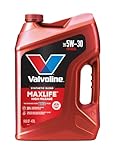
- Formulated for engines with 75,000 miles or more, Valvoline MaxLife High Mileage synthetic blend is formulated with seal conditioners to help prevent oil leaks and reduce oil consumption
- Delivers 20% better wear protection and 15% better sludge defense than industry standards to help prevent engine breakdown
- Extra detergents safeguard against friction, corrosion and deposits to keep high-mileage engines clean
- Advanced friction-fighting additives help maximize performance and improve fuel efficiency
- Provides performance benefits for high mileage, new and re-built engines alike


- Phosphorus Replacement Technology helps extend emission system life
- Superior dispersancy that fights sludge build up
- Exceptional oil burn-off protection exceeding industry standards* | Seal conditioners to help reduce leaks
- Advanced additives that help prevent engine wear | Improved Fuel Economy**
- Meets or exceeds the following specifications: API SP/SN PLUS/SN/SM | ILSAC GF-6 | Meets Ford WSS-M2C946-B1 | Meets Ford WSS-M2C961-A1 | * Based on API and ACEA volatility specifications | ** In 5W-20, 5W-30 and 10W-30 grades versus industry specifications

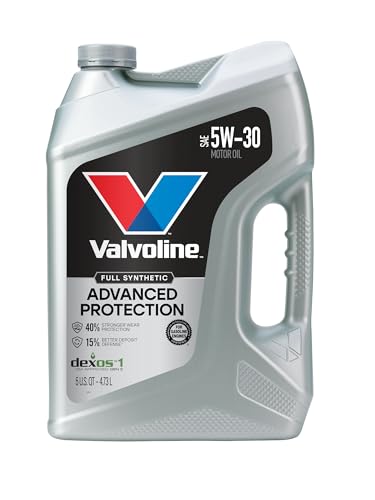
- Advanced protection against the four main causes of engine breakdown: wear friction heat and deposits
- Delivers 40% stronger wear protection than industry standards to reduce friction and improve fuel economy
- Provides 15% better deposit defense vs. industry standards, keeping engines cleaner for smoother performance and longer-lasting protection
- Up to 2.5X better heat protection vs. industry standards to fight harmful sludge formation and thermal breakdown
- Engineered for excellent low-temperature flow, reducing metal-to-metal contact during cold starts — when most engine wear typically occurs
This product presentation was made with AAWP plugin.