
NHTSA ID Number: 10156938
Manufacturer Communication Number: PIP5331G
Summary
This Preliminary Information communication provides information on a rattle, tick, or knock type noise. Any drivability concerns they should be addressed prior to the following diagnostic progression. A sound file or video with sound of the noise needs to be made prior to dis-assembly to help isolate to one area in the engine. There are four different steps to diagnosis the concern. This communication was updated to include the 2017, 2018, and 2019 model years.
76 Affected Products
Vehicles
| BUICK | ENCLAVE | 2013-2019 |
| BUICK | LACROSSE | 2013-2017 |
| CADILLAC | ATS | 2013-2015, 2019 |
| CADILLAC | ATS-V | 2016-2018 |
| CADILLAC | CTS | 2013-2019 |
| CADILLAC | SRX | 2013-2016 |
| CADILLAC | XTS | 2013-2019 |
| CHEVROLET | CAMARO | 2013-2015 |
| CHEVROLET | CAPTIVA | 2013-2016 |
| CHEVROLET | COLORADO | 2015-2016 |
| CHEVROLET | EQUINOX | 2013-2017 |
| CHEVROLET | IMPALA | 2013-2019 |
| CHEVROLET | TRAVERSE | 2013-2018 |
| GMC | ACADIA | 2013-2017 |
| GMC | CANYON | 2015-2016 |
| GMC | TERRAIN | 2013-2017 |
SEOCONTENT-START
Bulletin No.: PIP5331G
Published date: 03/19/2019
Preliminary Information
PIP5331G Ticking, Tap, or Rattle Noise From Engine
Models
| Brand: | Model: | Model Years: | VIN: | Engine: | Transmissions: | |
|---|---|---|---|---|---|---|
| from | to | |||||
| Buick | Enclave | 2013 – 2019 | ALL | ALL | 3.6 LFY, 3.6 LLT | ALL |
| Buick | LaCrosse | 2013 – 2017 | ALL | ALL | 3.6 LFX | ALL |
| Cadillac | ATS | 2013 – 2015 | ALL | ALL | 3.6 LFX | ALL |
| Cadillac | ATS-V | 2016 – 2019 | ALL | ALL | 3.6 LF4 | ALL |
| Cadillac | CTS | 2013 – 2019 | ALL | ALL | 3.6 LFX, LF3 | ALL |
| Cadillac | SRX | 2013 – 2016 | ALL | ALL | 3.6 LFX | ALL |
| Cadillac | XTS | 2013 – 2019 | ALL | ALL | 3.6 LFX, LF3 | ALL |
| Chevrolet | Camaro | 2013 – 2015 | ALL | ALL | LFX | ALL |
| Chevrolet | Colorado | 2015 – 2016 | ALL | ALL | LFX | ALL |
| Chevrolet | Captiva Sport | 2013 – 2016 | ALL | ALL | LFX | ALL |
| Chevrolet | Equinox | 2013 – 2017 | ALL | ALL | LFX | ALL |
| Chevrolet | Impala | 2013 – 2019 | ALL | ALL | LFX | ALL |
| Chevrolet | Traverse | 2013 – 2018 | ALL | ALL | 3.6 LFY, 3.6 LLT | ALL |
| GMC | Acadia | 2013 – 2017 | ALL | ALL | LLT | ALL |
| GMC | Terrain | 2013 – 2017 | ALL | ALL | LFX | ALL |
| GMC | Canyon | 2015 – 2016 | ALL | ALL | LFX | ALL |
Supersession Statement
This PI was superseded to update Model Years . Please discard PIP5331F.
Condition / Concern
Customers may bring their vehicle into the dealership for a rattle, tick, or knock type noise.
NOTE: If there are any drivability concerns they should be addressed prior to the following diagnostic progression.
NOTE: Please take a sound file or video with sound of the noise prior to dis-assembly.
This may be needed when contacting TAC or to be sent to engineering.
This could be all the time, only under load, or intermittent depending on the severity of the noise.
You may find this noise hard to isolate to one area in the engine.
After you have recorded a sound file of the noise try to isolate the noise to a general area of the engine.
At that point following the steps in this PI in ORDER may help pinpoint the concern.
Recommendations / Instructions
- Perform injector diagnosis to ensure there are no leaking injectors causing a noise due to excessive fuel in 1 cylinder.
a) Perform GDS2 or AFIT test on injectors to isolate a leaking injector.
b) Replace any out of specification injectors
c) Reevaluate the noise.
- Remove the intake manifold and visually inspect for excessive carbon on the intake valve stems and top of the valve causing noise.
a) If carbon is present then follow the latest version of 16-NA-383 to clean the valves or replace heads as needed.
b) Reevaluate the noise concern.
- Remove the cam cover of the affected bank (both if needed) to inspect for soft or spongy SHLAS (stationary hydraulic lash adjusters) (Lifters).
a) Push down on the rocker end at the SHLA to test for soft or spongy. (right side exhaust are most common but could be any)
SEE PICTURE
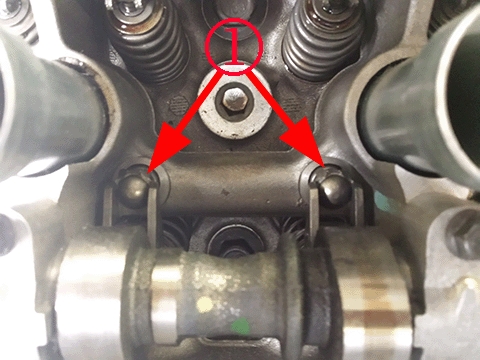
b) If soft or spongy SHLAS are found, carefully remove the affected head and inspect the oil passage below the head gasket for debris.
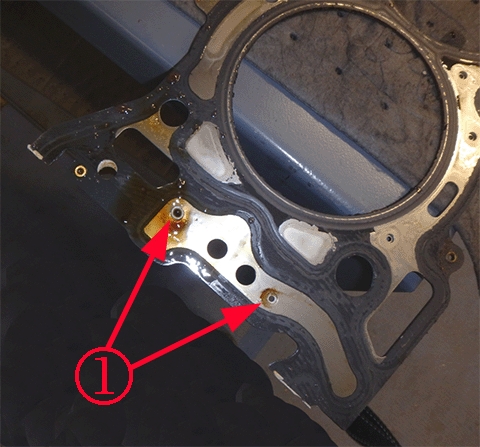
c) If debris is found, inspect the camshaft caps for wear or discoloration due to lack of oil.
d) If wear or discoloration is found then replace the cylinder head assembly with camshafts.
e) If there is no wear or discoloration, clean the oil passages and replace the head gasket.
f) Change the oil and filter.
g) Reevaluate the noise concern.
- Raise the vehicle while running or with an assistant inside.
a) With chassis ears or a stethoscope, listen to the right and left side of the engine.
b) Once the noise is isolated or if unable to isolate, remove the piston and rod assemblies from the affected bank(s) to inspect for either; a loose rod bushing in the rod, or a loose wrist pin in the bushing. We have seen both.
c) There should be no metal through the oil for this condition.
d) If this is found a piston and rod assembly will repair this noise.
For all of the above engine replacement is not necessary. Please perform the repairs for these conditions.
NOTE: If metal is found in the oil or throughout the system refer to the latest version of PIP5216.
Once all of the above inspections and / or diagnostics are completed, If nothing is found to be the cause for the noise, engine replacement MAY be necessary.
As more information becomes available from engineering this PI will be updated or superseded to a Technical Service Bulletin.
Warranty Information
For Vehicles Repaired Under Powertrain Warranty Use the Appropriate Labor Operation For Process Performed.
Please review IVH for warranty information.
SEOCONTENT-END
Bulletin No.: PIP5331G
Published date: 03/19/2019
To View or Download this Document Click Here
Bulletin No.: PIP5331C
Date: 18-Apr-2016
To View or Download this Document Click Here
- Formulated for engines with 75,000 miles or more, Valvoline MaxLife High Mileage synthetic blend is formulated with seal conditioners to help prevent oil leaks and reduce oil consumption
- Delivers 20% better wear protection and 15% better sludge defense than industry standards to help prevent engine breakdown
- Extra detergents safeguard against friction, corrosion and deposits to keep high-mileage engines clean
- Advanced friction-fighting additives help maximize performance and improve fuel efficiency
- Provides performance benefits for high mileage, new and re-built engines alike


- Phosphorus Replacement Technology helps extend emission system life
- Superior dispersancy that fights sludge build up
- Exceptional oil burn-off protection exceeding industry standards* | Seal conditioners to help reduce leaks
- Advanced additives that help prevent engine wear | Improved Fuel Economy**
- Meets or exceeds the following specifications: API SP/SN PLUS/SN/SM | ILSAC GF-6 | Meets Ford WSS-M2C946-B1 | Meets Ford WSS-M2C961-A1 | * Based on API and ACEA volatility specifications | ** In 5W-20, 5W-30 and 10W-30 grades versus industry specifications

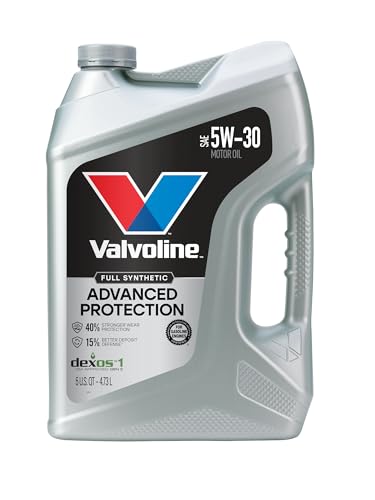
- Advanced protection against the four main causes of engine breakdown: wear friction heat and deposits
- Delivers 40% stronger wear protection than industry standards to reduce friction and improve fuel economy
- Provides 15% better deposit defense vs. industry standards, keeping engines cleaner for smoother performance and longer-lasting protection
- Up to 2.5X better heat protection vs. industry standards to fight harmful sludge formation and thermal breakdown
- Engineered for excellent low-temperature flow, reducing metal-to-metal contact during cold starts — when most engine wear typically occurs
This product presentation was made with AAWP plugin.