
NHTSA ID Number: 10113907
Manufacturer Communication Number: PIP5007F
Summary
This Preliminary Information communication advises the technician that vehicles with engine Regular Production Option Code LGH or LML may have an Exhaust Fluid Quality Poor message displayed on the Driver Information Center. Technician will need to complete the current Service Information diagnostic for any current Diagnostic Trouble Codes or symptoms found. If an Exhaust Fluid Quality Poor message is displayed with a specific Diagnostic Trouble Code, use that specific Service Information diagnostic, and repair the vehicle as necessary. If the dealer has found an Exhaust Fluid Quality Poor message with no Diagnostic Trouble Code, diagnose the condition using the current Service Information diagnosis for Diagnostic Trouble Code P20EE / P207F (P2BAD for 2012 and newer model years). After making repairs use the Service Information Document titled “Reductant Fluid Quality Test (With or without DTCs)” to evaluate and clear the Exhaust Fluid Quality Poor DIC message.
35 Affected Products
Vehicles
| MAKE | MODEL | YEAR |
| CHEVROLET | EXPRESS | 2010-2016 |
| CHEVROLET | SILVERADO 1500 | 2011, 2014 |
| CHEVROLET | SILVERADO 2500 | 2011-2016 |
| CHEVROLET | SILVERADO 3500 | 2013 |
| GMC | SAVANA | 2010-2016 |
| GMC | SIERRA 1500 | 2014 |
| GMC | SIERRA 2500 | 2011-2016 |
| GMC | SIERRA DENALI | 2011-2013, 2015-2016 |
Condition/Concern
Exhaust Fluid Quality Poor message displayed on the DIC. There may or may not be DTCs stored. An Exhaust Fluid Quality Poor message can be displayed with no DTCs.
The Exhaust Fluid Quality Poor DIC message notifies the customer that the ECM has detected a drop in the SCR NOx reduction efficiency.
This is to assist with vehicles that have difficulty completing the Reductant Fluid Quality Test (RFQT) and/or clearing the Exhaust Fluid Quality Poor Message.
1 Associated Document
Manufacturer Communications
Bulletin No.: PIP5007F
Date: Mar-2016
NHTSA ID Number: 10112163
Manufacturer Communication Number: PIP5007D
Summary
This Preliminary Information communication advises the technician that vehicles with engine Regular Production Option Code LGH or LML may have an Exhaust Fluid Quality Poor message displayed on the Driver Information Center. Technician will need to complete the current Service Information diagnostic for any current Diagnostic Trouble Codes or symptoms found. If an Exhaust Fluid Quality Poor message is displayed with a specific Diagnostic Trouble Code, use that specific Service Information diagnostic, and repair the vehicle as necessary. If the dealer has found an Exhaust Fluid Quality Poor message with no Diagnostic Trouble Code, diagnose the condition using the current Service Information diagnosis for Diagnostic Trouble Code P20EE / P207F (P2BAD for 2012 and newer model years). After making repairs use the Service Information Document titled “Reductant Fluid Quality Test (With or without Diagnostic Trouble Codess)” to evaluate and clear the Exhaust Fluid Quality Poor Driver Information Center message.
1 Associated Document
Manufacturer Communications
Bulletin No.: PIP5007D
Date: Aug-2014
NHTSA ID Number: 10113239
Manufacturer Communication Number: PIP5007C
Summary
This Preliminary Information communication advises the technician that vehicles with engine Regular Production Option Code LGH or LML may have an Exhaust Fluid Quality Poor message displayed on the Driver Information Center. Technician will need to complete the current Service Information diagnostic for any current Diagnostic Trouble Codes or symptoms found. If an Exhaust Fluid Quality Poor message is displayed with a specific Diagnostic Trouble Code, use that specific Service Information diagnostic, and repair the vehicle as necessary. If the dealer has found an Exhaust Fluid Quality Poor message with no Diagnostic Trouble Code, diagnose the condition using the current Service Information diagnosis for Diagnostic Trouble Code P20EE / P207F (P2BAD for 2012 and newer model years). After making repairs use the Service Information Document titled “Reductant Fluid Quality Test (With or without Diagnostic Trouble Codes)” to evaluate and clear the Exhaust Fluid Quality Poor Driver Information Center message.
1 Associated Document
Manufacturer Communications
Bulletin No.: PIP5007C
Date: Sep-2013
NHTSA ID Number: 10063393
Manufacturer Communication Number: PIP5007C
Summary
SUMMARY TO BE PROVIDED ON A FUTURE DATE.
1 Associated Document
Service Bulletin Document
Bulletin No.: PIP5007C
Date: September, 2013
SB-10063393-2273.pdf 239.148KB
NHTSA ID Number: 10112734
Manufacturer Communication Number: PIP5007B
Summary
This Preliminary Information communication advises the technician that vehicles with engine Regular Production Option Code LGH or LML may have an Exhaust Fluid Quality Poor message displayed on the Driver Information Center. Technician will need to complete the current Service Information diagnostic for any current Diagnostic Trouble Codes or symptoms found. If an Exhaust Fluid Quality Poor message is displayed with a specific Diagnostic Trouble Code, use that specific Service Information diagnostic, and repair the vehicle as necessary. If the dealer has found an Exhaust Fluid Quality Poor message with no Diagnostic Trouble Code, diagnose the condition using the current Service Information diagnosis for Diagnostic Trouble Code P20EE / P207F (P2BAD for 2012 and newer model years). After making repairs use the Service Information Document titled “Reductant Fluid Quality Test (With or without Diagnostic Trouble Codes)” to evaluate and clear the Exhaust Fluid Quality Poor Driver Information Center message.
1 Associated Document
Manufacturer Communications
Bulletin No.: PIP5007B
Date: Jan-2013
NHTSA ID Number: 10063394
Manufacturer Communication Number: PIP5007B
Summary
SUMMARY TO BE PROVIDED ON A FUTURE DATE.
1 Associated Document
Service Bulletin Document
Bulletin No.: PIP5007B
Date: January, 2013
SB-10063394-2273.pdf 239.291KB
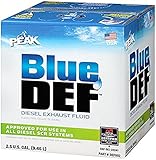

- Meets GM Original Equipment specifications to be approved for use in GM vehicles as well as in non-GM diesel vehicles that have an SCR (Selective Catalytic Reduction) system to meet regulated NOx emissions (Based on EPA certification testing. Your actual emissions will vary based on several factors including temperature, terrain, and driving conditions).
- High quality formula is made from high purity urea and deionized water.
- Meets API regulations and ISO 22241 standard for purity and concentration
- Nozzles sold separately


- Prime Guard DEF is a safe, environmentally friendly solution for Selective Catalytic Reduction
- Prime Guard DEF meets the stringent ISO 22241, AUS 32 and DIN 70070 standards for purity and concentration
- Prime Guard DEF is an ultrapure, formaldehyde-free, NOx reducing treatment specifically formulated for diesel engines equipped with SCR systems
- Prime Guard DEF is API certified, guaranteeing the quality and suitability for proper SCR operation
- Prime Guard DEF 2.5 Gallon single-pack box includes a dispensing nozzle for an easy pour

- ENGINEERED: For use in Selective Catalytic Reduction (SCR) systems on diesel engines
- EFFICIENCY: BlueDEF diesel exhaust fluid is key to helping improve fuel economy by up to five percent
- PROTECTION: Diesel exhaust fluid is non-toxic and safe to handle
- QUALITY: Stable, colorless and odorless, and also meets ISO Standards 22241 for purity and composition
- EFFORTLESS: Easily Inject the fluid into your exhaust stream with a specialized dosing module
SEOCONTENT-START
Bulletin No.: PIP5007F
Date: Mar-2016
Subject: Diagnostic Tip – Exhaust Fluid Quality Poor Message Difficult To Clear
Models: 2010 – 2016 Chevrolet Express and GMC Savana
2011 – 2016 Chevrolet Silverado and GMC Sierra
Equipped with the 6.6L Duramax Diesel Engine RPO codes LGH or LML
This PI was superseded to update Model Years. Please discard PIP5007E.
The following diagnosis might be helpful if the vehicle exhibits the symptom(s) described in this PI.
Condition/Concern
A dealer may encounter a customer concern of an Exhaust Fluid Quality Poor message displayed on the DIC. The dealer may or may not find DTCs stored. An Exhaust Fluid Quality Poor message can be displayed with no DTCs.
The Exhaust Fluid Quality Poor DIC message notifies the customer that the ECM has detected a drop in the SCR NOx reduction efficiency.
This PI is to assist with vehicles that have difficulty completing the Reductant Fluid Quality Test (RFQT) and/or clearing the Exhaust Fluid Quality Poor Message.
Recommendation/Instructions
Complete the current SI diagnostic for any trouble codes or symptoms found. If an Exhaust Fluid Quality Poor message is displayed with a specific DTC, use that specific SI diagnostic, and repair the vehicle as necessary.
Note: An Exhaust Fluid Quality Poor message does not always mean the fluid is contaminated or needs to be changed. Use the J26568 – Coolant and Battery Fluid Tester to test the fluid before deciding to discard it.
If the dealer has found an Exhaust Fluid Quality Poor message with no DTCs, diagnose the condition using the current SI diagnosis for DTC P20EE / P207F (P2BAD for 2012 and newer Model years). After making repairs use the SI Document titled “Reductant Fluid Quality Test (With or without DTCs)” to evaluate and clear the Exhaust Fluid Quality Poor DIC message.
If the Reductant Fluid Quality Test does not complete, or the Exhaust Fluid Quality Poor DIC message is difficult to clear, please follow the description and suggestions below.
General Information/Helpful Guidelines:
If the vehicle has been in a cold climate condition, defined as -7C/20F or less over the last few days, it may be in “frozen tank status” which prevents the Reductant Fluid Quality Test (RFQT) from evaluating a result when triggered. Frozen tank status is entered when the vehicle key on event reads a DEF tank temperature below -7C/20F. The DEF tank temperature may be warmer after extended idles but only the conditions at key on are considered. To exit “frozen tank status”, the vehicle needs to be soaked in a warm garage for greater than 6 hours with the key off continuously. After this 6 hour key off event, make sure the DEF tank temperature is above -7C/20F immediately after key on. If not, it is necessary to repeat the soak procedure allowing the DEF tank to warm up above the -7C/20F threshold.
Note: When parking the vehicle outside to perform the RFQT it is important to monitor the ambient temperature. If the MAF senses intake ambient temperature below -7C/20F the test may not run correctly or timeout.
The Reductant Fluid Quality Test (RFQT) may not pass the first test or it may time out (45 minutes for LGH, 70 minutes LML). If the RFQT does not pass, run a DPF service regeneration followed by an ECM power down and then another RFQT. If after 2 attempts of this total procedure, the RFQT does not pass, it is probable a faulted condition still exists with the vehicle.
An ECM power down is required between repeated RFQT tests (Key off, remove the ignition key, and unplug the Tech 2 for up to two minutes between tests).
It is important to note whether an RFQT passes/fails versus a timeout event. Each of these could have a different root cause. For the case in which the test times out, one or more of the Conditions for running the DTC (as stated in the P20EE) were not met. There will not be any indication on the Tech 2 for which condition was not met. For the case in which the test fails, it is necessary to inspect the DEF system/components for symptoms of failure. The following guides
can be used to help pinpoint the suspect component.
1. During the RFQT, the downstream NOx ppm should read roughly 70% less than the upstream NOx ppm on a healthy system. (As an example the upstream NOx ppm should be near 100ppm when the downstream NOx sensor 2 is around 30ppm or less).
2. During a DPF regeneration, the SCR is too hot to reduce NOx effectively. The upstream and downstream NOx ppm values should be relatively similar.
NOx2 can be up to 30% higher than NOx1 in some cases.
3. During a road test at highway speeds (with system at operating temperature), the downstream NOx sensor should be 70% less than the upstream sensor and transition in the same direction as the upstream sensor, but at a much lower magnitude. During a road test, you can collect transient data for NOx1 and NOx2. After a heavy acceleration followed by a tip out (0 pedal), both sensors should go to zero while coasting down. If NOx2 does not go to zero shortly after NOx1, NOx2 is either faulty or the system is saturated with DEF. Performing this test during or shortly after a DPF regen prevents the system from being saturated with DEF.
4. If the above NOx sensor comparisons aren’t true, there are several possible causes. The NOx sensor cannot distinguish between NOx and liquid NH3 (DEF). High NOx sensor 2 readings can be caused by DEF getting past the SCR catalyst. This can be the result of a degraded SCR catalyst or a condition that causes excessive DEF in the SCR. After a DPF regeneration, the SCR system is purged of excessive DEF. It is easier to evaluate if an SCR brick is compromised right after a regeneration because it eliminates the extra DEF that the system was exposed to.
5. The SCR system can also store NOx in cold temperatures (extended idle). When the system warms up, this NOx can be released and results in a brief NOx2 increase above NOx1.
6. If NOx2 is malfunctioning or poisoned, NOx 2 values will be influenced and may be stuck higher than NOx1
7. This document assumes that the DEF injector volume has been verified and passes with 3 distinct spray plumes from the injector.
8. This document also assumes the intake and exhaust system are leak free. Intake and exhaust leaks can cause changes to the dosing system performance due to varied NOx output from the engine.
9. After-market components including, but not limited to, air induction parts, performance modifiers, grill covers, and exhaust modifications may negatively influence the DEF system performance. If all conditions above appear to be functioning normally, SCR replacement may be required but is a very rare occurrence. If the SCR is replaced, the new component will require a DPF service regen followed by the RFQT procedure prior to releasing the vehicle.
Also, refer to the SI for appropriate resets to be performed by the Tech2.
Please follow this diagnostic or repair process thoroughly and complete each step. If the condition exhibited is resolved without completing every step, the remaining steps do not need to be performed.
SEOCONTENT-END
This product presentation was made with AAWP plugin.