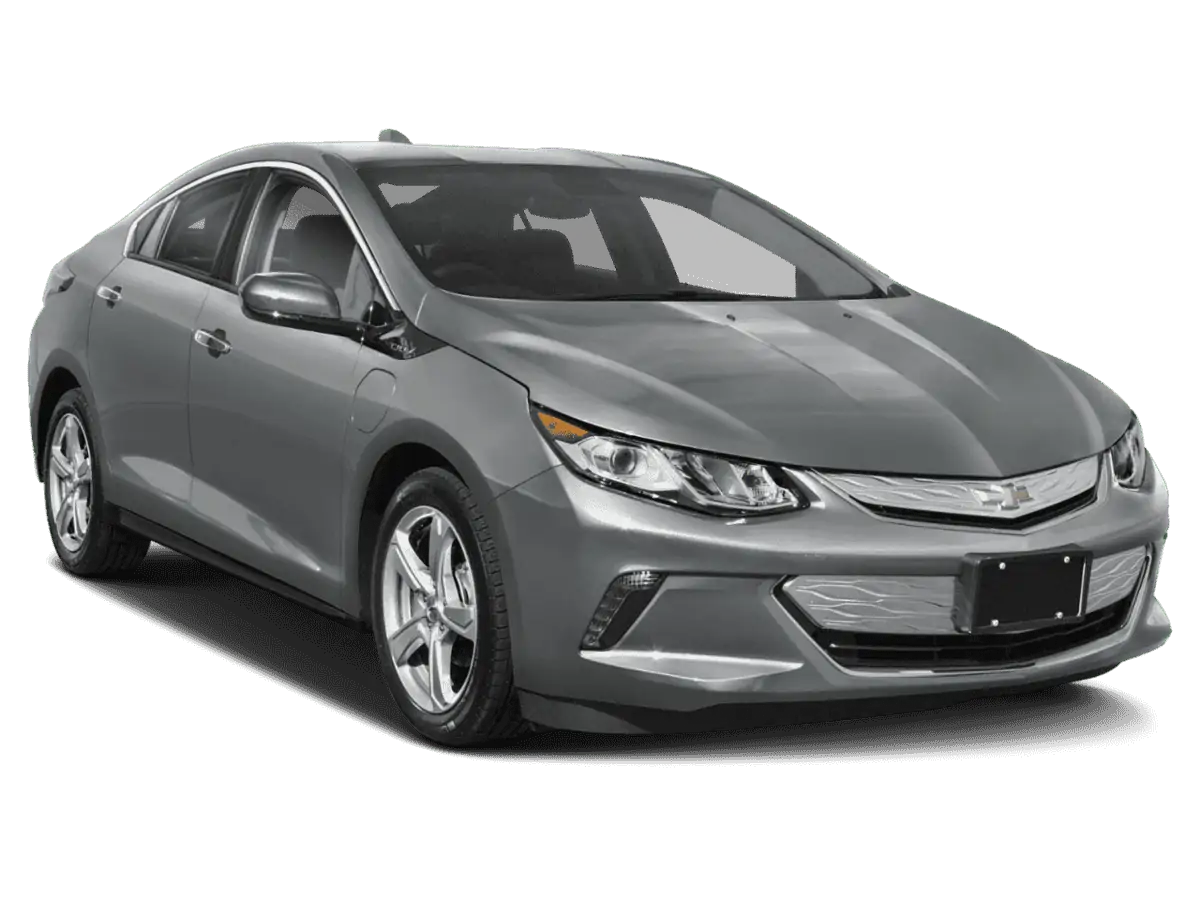
NHTSA ID Number: 10161002
Manufacturer Communication Number: PIC6231D
Summary
This Preliminary Information communication provides information to the technician about vehicles EV range is less than expected, or the estimated EV range on the display is greater than the actual range achieved. Dealer should walk the customer though using the energy screen. The energy screen will help the customer understand were there battery energy is being used.
5 Affected Products
Vehicles
SEOCONTENT-START
Bulletin No.: PIC6231D Published date: 05/13/2019
Preliminary Information
PIC6231D EV Range Driving Tips
Models
Model Years:
VIN:
from to
Chevrolet Volt 2017 – 2019 All All
L3A MKV Cadillac CT6 2017 – 2018
All All LTG MRD
Involved Region or Country:
Condition:
North America
Some customers may state that their EV range is less than expected, or the estimated EV range on
the display is greater than the actual range achieved. This is most commonly noticed as the
average outdoor temperature decreases in the autumn and winter months.
Cause: The energy is being used in other ways, More energy to climb
hills, energy to heat or cool the cabin
Correction:
The electric range of the Volt and CT6 may be higher or lower than expected due to the driver’s
technique, the terrain, climate settings, and/or the outdoor temperature.
In other words, driving in extreme outdoor temperatures, accelerating and braking aggressively, use
of climate control, and/or driving in areas with elevation changes will impact the electric range.
The electric range displayed in the vehicle is a prediction based on past driving conditions (kWh
of energy used per distance traveled), current ambient temperature, and climate control settings.
It is normal for the displayed value to adjust while the vehicle is driven as this number is
constantly being recalculated to provide the best estimate of electric range.
The displayed electric range can vary seasonally, weekly, and daily based on the changes in
technique, terrain, and outdoor ambient temperatures.
Since the energy scores for the driver’s technique, terrain, climate settings, and the outdoor
temperature are reset on the center screen with each full charge event, it can be difficult to
determine what the scores are while the vehicle is driven at length by the customer. Try to Review
before charging at the dealer.
Information:
the 2017 model year electric vehicles provide two helpful graphical displays in the center tack
energy screen, or “leaf screen,” to help customers understand why their EV range will vary.
the first is a doughnut chart showing the percentage of energy used for propulsion, the percentage of
energy used for cabin climate, and the remaining energy in the pack remaining in black (Volt).
The second chart provides a total electrical energy score for the driver from -20 to +15 with a
graphical breakdown of each of the critical areas affecting EV range.
While the scored value itself is unitless, it provides feedback to the driver with a positive or
negative number to help explain the likely reasons the EV range is different than expected.
For example, a total score of +5 would yield greater than expected EV range, 0 would be average,
and -10 would correspond to a lower than expected value for EV range.
All values are reset after a complete charge and may not be stable until approximately 10 miles (16
km) have been driven.
2016 – 2018 models – Note it is just Score
2019 Volt- Note New Change, the Score has changed to Miles, but it is still considered a score only
and not a mileage measurement.
To improve scores in each area, consider the following:
Technique
· The score for technique is based on the efficiency gauge in the instrument cluster. The
more time spent in the middle / green zone will equate to a better score.
· Driving aggressively (rapid accelerations and decelerations) will drain the battery
faster.
· High speed driving will deplete battery capacity and electric range quickly. Electric
range is maximized at 89 km/h (55 mph) and below.
· Increased mass from additional cargo or passengers can also decrease the electric range.
· Use cruise control when appropriate for smoother applications of torque.
· Plan ahead for decelerations. For example, do not rush to red traffic signals and suddenly
brake.
· Do not shift to N (Neutral) while braking. The vehicle recovers energy while coasting
and braking in Drive (D) or Low (L).
· Use Low (L) and/or Regen On Demand Paddles. These help reclaim maximum energy
automatically, requiring less brake pedal application while providing a controlled efficient way to
slow the vehicle down. There is no added wear on the vehicle to use these features.
· Use Normal Mode when possible. Sport Mode provides more responsive acceleration than
Normal Mode but can lower the score for technique by moving the efficiency ball out of the optimal
zone.
Note: A significantly different driving style (higher speed and acceleration rate, harder braking,
etc.) compared to the previous drive event (the last X miles of history recorded in the vehicle’s
computer) will cause the actual electric range to be significantly less than the initially predicted
electric range.
Terrain
· The score for terrain reflects even slight changes in elevation while driving.
· Driving up or down even a 1% grade can greatly affect EV range. Large elevation changes
in mountainous regions will have an even larger impact than this score will reveal.
· Elevation changes are calculated through mathematical modeling to determine the scored
value.
· Keep tires at the proper inflation pressures. Colder outdoor temperatures will result in
lower pressure in the tires.
· Strong headwinds or rain/snow will negatively impact this score.
· Note: Volt – Use Mountain Mode when grades greater than 5% will be traversed at greater
than 60mph. This will limit EV range but allow for climbing grades at posted speed limits. Engage
Mountain Mode before reaching 10 miles (16 km) of EV range remaining.
Climate Settings
· The use of cabin heat and air conditioning systems decreases the energy available for
electric driving. The best EV range is achieved with the heat, air conditioning, and fan turned
off.
· Less energy is used at low fan speeds. Fan Only mode is the most energy efficient climate
setting. ECO mode (on some models) is for moderate air conditioning and heater operation and is the
next most energy efficient setting. Comfort mode provides the most comfortable cabin but uses the
most battery energy.
· The vehicle is equipped with the Auto Defog feature, which can be enabled or disabled
via the vehicle settings. If this feature is enabled, the vehicle may automatically enable the
Cabin Heater and Air Conditioning Compressor and use energy if the system detects the need to defog
the vehicle. If the driver would like to have manual control over this, please refer to your user
manual for disabling this feature.
· Use the auto heated seat feature and heated steering wheel (if equipped) instead of
cabin heat. Heating the seat or steering wheel uses less energy than heating the entire vehicle
interior.
· Use cabin preconditioning (“remote start”) to heat or cool the interior when the vehicle
is plugged in to maximize the EV range by utilizing some electricity from the electrical utility
grid.
Note: Some EV range may be lost if the charge station cannot supply enough power for the climate
systems during preconditioning. Level 1 portable cord sets are limited to about 1kW of energy.
· Turn off the front and rear window defog/defrost when they are no longer needed.
· Avoid driving with the windows open at higher highway speeds due to aerodynamic drag.
Outside Temperature
· During periods of cold temperatures, the electric cabin heater, electric air
conditioning, and battery heater may be running to defrost the windows and provide heat. These can
have a very noticeable effect on EV range.
· The actual EV range during periods of cold temperatures will be at the low side of range
estimates. This may become more evident when a customer is driving for maximum fuel efficiency or on
the same route and the only thing that changed was outside temperature. This is no different than a
gas engine. Fuel mileage also decreases due to cold temperatures, efficiency losses, cold starts,
cabin fan, and the use of the defrosters.
· Note: Volt – “ENGINE RUNNING DUE TO TEMPERATURE” DIC Message: In cold conditions, below
35F (2 C) or 15F (-9 C) (depending on Engine Assisted Heating selection) the customer may
experience the engine running due to low ambient temperatures even when the battery is charged.
This provides supplemental cabin heat as well as some fuel energy for propulsion.
· Note: Volt – Engine Assisted Heating – When “At Very Cold Outside Temperatures” is
selected in the vehicle settings, the Volt will not turn on the engine until the outside
temperature is below 15°F (-9C) , but this has a greater impact on electric range in the 15°F (-9
C) to 35°F (2 C) ambient range due to the added electric heat needed for the cabin.
· During high ambient temperatures, the use of Air Conditioning will also affect electric
range, but to a lesser extent. This is due to the greater coefficient of performance by the
thermodynamic heat cycle for A/C.
· High ambient temperatures may also cause an increase in battery temperatures. The
electric A/C compressor may run to provide cooling to the liquid battery chiller to maintain proper
battery temperature.
· If operating the HVAC system in Fan Only Mode, cold air may be felt through the HVAC
vents during chiller operation, this is normal operation. When the chiller is
operating, electric range will be affected.
· Avoid parking in direct sunlight or use sunshades inside the vehicle to aid in a cooler
cabin during summer months.
For Volt customers, GM encourages use of the EV Range Reset function in GDS2 under:
Module Diagnostics -> Hybrid Powertrain Control Module 2 -> Configuration/Reset Functions -> Reset
Functions -> EV Range Reset
This will reset the EV Range Estimate but not the learned battery capacity. If the battery has
degraded over time and/or the vehicle has negative energy scores from winter or aggressive driving,
the EV Range Estimate will lower again over the next few charge cycles. This function is not yet
available in the CT6 Plug-in Hybrid Vehicle.
Version History
Version 5
11/18/2016 – Created on
10/10/2017 – Added CT6 and added 2018 model year
10/22/2018 – Removed Bolt EV and Ampera E and added picture of 2019 volt
Modified
screen
02/12/2019 – Remove pastel color Bolt EV pics 05/13/2019 – Added Volt EV/range Reset
SEOCONTENT-END
Bulletin No.: PIC6231D
Published date: 05/13/2019
To View or Download this Document Click Here
NHTSA ID Number: 10154296
Manufacturer Communication Number: PIC6231C
Bulletin No.: PIC6231B
Published date: 10/23/2018
To View or Download this Document Click Here
Bulletin No.: PIC6231A
Published date: 10/16/2017
To View or Download this Document Click Here
Bulletin No.: PIC6231
Date: Nov-2016
To View or Download this Document Click Here
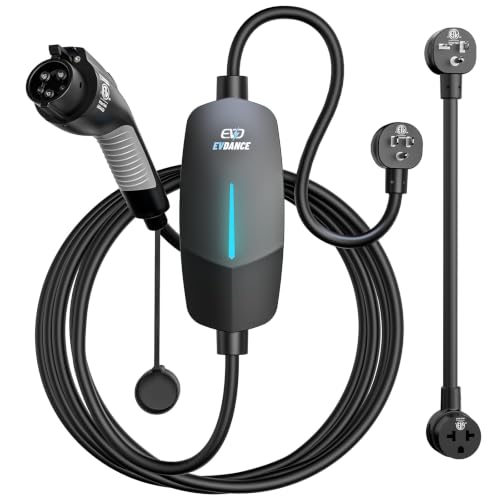
- Flex Level 1 EV Charger - The EVDANCE Level 1 electric car charger is compatible with J1772 electric vehicles and plug-in hybrid vehicles (North American Standard). *Tesla requires a SAE J1772 adapter.
- Convenient to Use - This charger has both NEMA 6-20 plug for 16A 240V charging (3.68kW, 10-12 mi/h) and a NEMA 6-20 to 5-15 plug adapter for 12A 120V charging (1.44kW, 2-5 mi/h). The included bag makes it easier to carry on the go. It also has a 25ft cable length, you can use it flexibly from anywhere in the garage or driveway.
- Check Your Outlet Type -This charger works with standard 120V NEMA 5-15/5-20 outlets (2-5 mph charging speed) and 240V NEMA 6-20 outlets (10-12 mph) . It's not compatible with NEMA 6-15/10-30/14-30/14-50/6-50 outlets – you'll need a NEMA 14-50/14-30/10-30/6-50 to 6-20 adapter (sold separately) to connect.
- Compatible EV Models -This EV charger works with most major electric vehicles, including Ford, Chevrolet, Hyundai, Audi, Nissan Ariya, Rivian R1S, Kia, and others. However, it's not compatible with Mini Cooper Electric Hardtop,Toyota Prus Prime/Z4X/RAV4Prime, Porsche Taycan Base/4S/Turbo/Turbo S or Tesla models (Tesla requires a J1772 to Tesla Adapter, sold separately). For a full list of compatible models, check out the Full Compatibility List on our product page.
- Indication Displays - LED display that can tell you the status as well as indicate errors while charging your electric vehicle.

- WORKS WITH EVERY NON-TESLA EV: Standard J1772 connector plugs straight into Ford, Chevrolet, Hyundai, Kia, Nissan, BMW, Volkswagen, Audi, Rivian, Lucid and every other EV or plug-in hybrid sold with a J1772 port - no adapter needed. Tesla drivers can charge too, using the J1772 adapter that comes with the car.
- PLUG IN, NO HARDWIRING: Level 2 charger delivers up to 40A to fully charge most EVs overnight. Plugs into a 240V, 4-prong NEMA 14-50 outlet (the RV/range type - NOT a dryer outlet) on a dedicated 50A circuit. The extra-long 25 ft cable easily reaches across a garage or driveway. Before ordering, check your car's port type and that you have the right outlet.
- CONTROL & SAVE FROM YOUR PHONE: A stronger built-in antenna keeps the charger online even in a garage or basement. Use the free app to start/stop charging, set speed (6-40A), get reminders, and track energy use and cost. Schedule off-peak overnight charging to cut your electric bill. Requires 2.4 GHz WiFi.
- SAFETY-CERTIFIED & WEATHERPROOF: Independently tested and certified (UL, ETL, FCC, Energy Star). A fully sealed IP66 / NEMA 4 housing stands up to rain, snow, heat and dust indoors or out, and internal steel shielding protects the electronics for years of reliable use.
- GLOW-IN-THE-DARK HOLSTER: The included high-visibility holster glows in the dark so you can find and dock the plug easily at night. Holds the connector securely when not in use.

- LEVEL 1 CHARGING - The Lectron Level 1 Charger lets you quickly charge your EV with a standard 120V outlet; You get 15 amps and 1.65 kW of power for the standard full-charge time for your car, at home or at wor
- CONVENIENT OVERNIGHT CHARGING - The Lectron 15 Amp EV Charger is a more affordable and faster charging option compared to other Level 2 EV chargers, delivering an extra 40-50 miles of overnight charge at home — without breaking the bank
- J1772 COMPATIBILITY - This J1772 charger is compatible with all electric vehicles that use the J1772 standard, including BMW, Ford, Honda, Hyundai, Kia, Porsche, Nissan, and Chevy
- SAFE AND RELIABLE - FCC and ETL certified (UL2594 standard) for safety with overvoltage, overcurrent, and short circuit protection; Energy Star certified for efficiency; IP65 rated for dust and water resistance
- PORTABLE CONVENIENCE - Whether you're on a road trip or visiting a friend, you can easily plug in your EV and charge with our portable EV charger. Please refer to the included User Manual for complete operating instructions and compatibility requirements
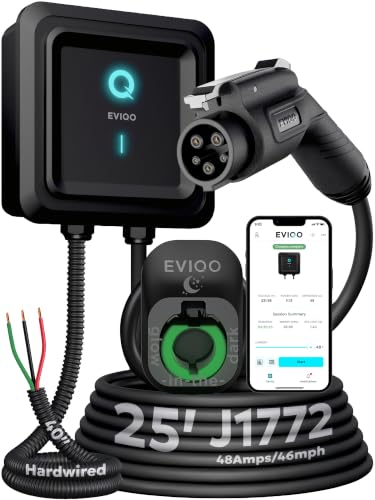
- WORKS WITH EVERY NON-TESLA EV: Standard J1772 connector plugs straight into Ford, Chevrolet, Hyundai, Kia, Nissan, BMW, Volkswagen, Audi, Rivian, Lucid and every other EV or plug-in hybrid sold with a J1772 port - no adapter needed. Tesla drivers can charge too, using the J1772 adapter that comes with the car. The extra-long 25 ft cable easily reaches across a garage or driveway.
- HARDWIRED - PROFESSIONAL INSTALL: This Level 2 charger is hardwired (not plug-in), so a licensed electrician installs it per National Electrical Code. It delivers up to 48A on a dedicated 60A, 240V circuit - enough to charge most EVs fully overnight. Want more speed? You can set DIP switches 4 and 5 to unlock 50A on a dedicated 70A circuit. Before ordering, check your car's port type and that your electrical panel can support the circuit.
- CONTROL FROM YOUR PHONE: A stronger built-in antenna keeps the charger online even in a garage or basement. Use the free app to start and stop charging, set the charging speed (6-48A), get reminders, and track how much energy and money each charge uses. Requires a 2.4 GHz home WiFi network.
- SAFETY-CERTIFIED & WEATHERPROOF: Independently tested and certified (UL, ETL, FCC, Energy Star). A fully sealed IP66 / NEMA 4 housing stands up to rain, snow, heat and dust indoors or out, and internal steel shielding protects the electronics for years of reliable use.
- GLOW-IN-THE-DARK HOLSTER: The included high-visibility holster glows in the dark so you can find and dock the plug easily at night. Holds the connector securely when not in use.

- Charge with Confidence: ChargePoint builds reliable, flexible EV charging stations for home, business, and fleets. Get 24/7 support and access to hundreds of thousands of North American charging locations
- Charge Smart: With the user-friendly ChargePoint Mobile App, you can control your electric car charger, manage reminders, connect to smart home devices, find stations, get data and charging info, and access the latest features
- Vast Network: Wherever you go, ChargePoint’s network includes 274k+ stations across North America and Europe and 565k+ roaming partner stations
- Safe & Durable: Rely on this UL-certified EV charger for safe home charging. It can be installed indoors or outdoors by an electrician and includes a cold-resistant cable
- Fast & Powerful: This EV charger charges 9× faster than a 120V outlet, delivering up to 45 mi/hr., dependent upon your vehicle. It features a J1772 connector for all non-Tesla EVs and plugs into a 240V outlet with a 14-50 receptacle, requiring a 40A or 50A circuit. For Tesla EVs, this will require an adapter
This product presentation was made with AAWP plugin.