
NHTSA ID Number: 10155077
Manufacturer Communication Number: PI1297C
Summary
This preliminary informational bulletin provides diagnostic tips that may be helpful in correcting a customer concern about a whistle noise heard from the engine area after the vehicle has warmed up, or for up to 10 seconds after the engine is shut off.
Condition/Concern
Whistle or chirp noise heard from the engine area after the vehicle has warmed up. It is also possible for this noise to continue for up to 10 seconds after the engine is shut off.
17 Affected Products
Vehicles
| MAKE | MODEL | YEAR |
| BUICK | ENCORE | 2013-2015 |
| CADILLAC | ELR | 2014-2015 |
| CHEVROLET | CRUZE | 2013-2015 |
| CHEVROLET | SONIC | 2013-2015 |
| CHEVROLET | TRAX | 2013-2015 |
| CHEVROLET | VOLT | 2013-2015 |
1 Associated Document
Manufacturer Communications
Bulletin No.: PI1297C
Date: November, 2018
NHTSA ID Number: 10139439
Manufacturer Communication Number: PI1297B
Summary
This preliminary informational bulletin provides diagnostic tips that may be helpful in correcting a customer concern about a whistle noise heard from the engine area after the vehicle has warmed up, or for up to 10 seconds after the engine is shut off.
1 Associated Document
Manufacturer Communications
Bulletin No.: PI1297B
Date: Jan-2015
NHTSA ID Number: 10139201
Manufacturer Communication Number: PI1297A
Summary
This preliminary informational bulletin provides diagnostic tips that may be helpful in correcting a customer concern about a whistle noise heard from the engine area after the vehicle has warmed up, or for up to 10 seconds after the engine is shut off.
1 Associated Document
Manufacturer Communications
Bulletin No.: PI1297A
Date: Jan-2015

- Powerful Carbon Removal: Quickly dissolves tough carbon, soot, and varnish deposits from pistons, valves, combustion chambers, and spark plugs.
- Restores Engine Efficiency: Restores piston ring mobility, balances cylinder compression, and improves fuel combustion efficiency.
- Safe & Effective Formula: Compatible with catalytic converters, oxygen sensors, engine seals, and rubber components.
- Easy Application: Convenient aerosol spray for straightforward application directly into engine cylinders.
- Enhanced Performance: Boosts engine responsiveness, reduces emissions, and promotes smoother running conditions.
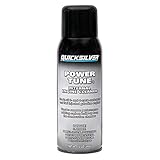


- Proven to clean intake valves on GDI engines and turbo systems
- Easily installed through the air intake system
- Highest concentration PEA (Polyether Amine) detergency available
- Proven to remove up to 46% of GDI Intake Valve deposits in 1 hour
- 150X more concentrated than fuel additives
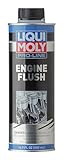
- Easy way to clean and flush the oil systems of gasoline and diesel engines
- Gentle and rapid cleaning
- Neutral to seals and other materials installed in the engine
- Compatible with catalytic converters
- Simple to use

- Perfect for both gasoline and diesel engines
- 16 fl oz treats up to 200 Gallons or 750 Liters of gasoline or diesel! A little goes a long way! 1:1600 Low-Cost Treat Rate
- The true fuel catalyst - harness every particle of energy in the fuel. Restore engine power and fuel economy
- Reduce engine blow-by & oil use, restore compression
- The ultimate diesel treatment to clean the entire post-combustion system (turbo, DPF), preventing premature failure and significantly reducing regeneration frequency
SEOCONTENT-START
Service Bulletin
File in Section: –
Bulletin No.: PI1297C
Date: November, 2018
PRELIMINARY INFORMATION
Subject: Diagnostic Tips for Engine Compartment Whistle Noise or Chirp Noise
Models: 2013-2015 Buick Encore
2014-2015 Cadillac ELR
2013-2015 Chevrolet Cruze, Sonic, Trax, Volt
Equipped with 1.4L Engine (RPO LUV or LUU)
Attention: This PI also applies to any of the above models that may be China, Europe and Australia Export models.
This PI has been revised to update the Recommendation/Instructions. Please discard
PI1297B.
Condition/Concern
Some customers may comment about a whistle or chirp noise heard from the engine area after the vehicle has warmed up. It is also possible for this noise to continue for up to 10 seconds after the engine is shut off.
Recommendation/Instructions
There may be several causes for a whistle noise from the engine compartment. It is important to try and isolate what component could be causing this whistle noise without replacing multiple parts by following the diagnostic tips below:
Vacuum leak most likely at the front crankshaft seal (Vehicles Built Prior to December 1, 2014)
Important: Vehicles built after the above date already have the new design front crank seal.
With the engine running, remove the oil dipstick. If the noise stops, it was due to a vacuum leak most likely at the front crankshaft seal. Replace the seal and retest. For this fault, a customer may also comment that they hear the noise for up to 10 seconds after the engine is shut off. This is due to the vacuum in the engine crankcase equalizing with the atmospheric pressure. Proceed to the next tip if the noise is still present.
Water Pump
Whistle noise at the water pump may be caused by one of the following conditions:
• Low coolant with air moving through the cooling system.
• Noisy water pump bearing (rattle or growl).
• The coolant shaft seal (higher pitched whine, typically heard at idle only with engine warm).
Squeeze the upper radiator hose to see if this changes or stops the whistle sound. If not, carefully reduce the pressure in the reservoir tank. If the noise goes away, try adding coolant while thoroughly bleeding the air out of the cooling system. Proceed to the next tip if the noise is still present.
Drive Belt
Remove the accessory drive belt and start the engine. If the noise goes away, then it could have been due to the water pump or the belt tensioner. The use of a stethoscope to listen for the location of the noise may help to isolate which component is causing the noise.
SEOCONTENT-END
This product presentation was made with AAWP plugin.