
NHTSA ID Number: 10201109
Manufacturer Communication Number: 15-NA-068
Summary
Front Lower Ball Joint and Knuckle Inspect ion After Road Hazard Tire/Wheel Damage and/or Noise from Front End
3 Affected Products
Vehicle
| MAKE | MODEL | YEAR |
| CHEVROLET | CORVETTE | 2014-2016 |
Condition
Some customers may comment on a ticking/clicking/metallic grinding noise heard from front suspension area or lash in steering wheel after a severe road or track front suspension impact.
Cause
This condition may be due to damage on the lower ball joint to steering knuckle connection.
Correction
The front steering knuckle and lower ball joint need to be inspected following the procedure below.
Parts Information
| Description | Part Number | Qty |
| NUT | 11546368 | 1 (As Required) |
| KNUCKLE-STRG (LH) | 84036208 | 1 (As Required) |
| KNUCKLE-STRG (RH) | 84036209 | 1 (As Required) |
| ARM ASM-FRT LWR CONT (LH) | 23490421
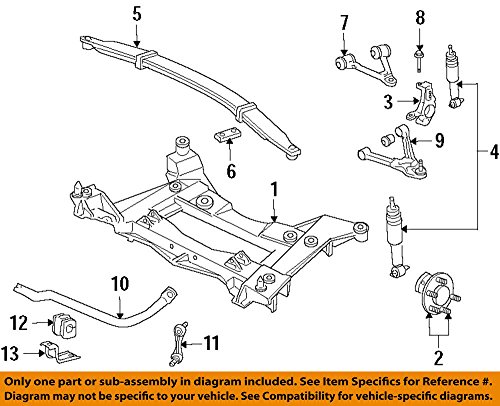
GM 23490421 ARM ASM-FRT LWR CONT
| 1 (As Required) |
| ARM ASM-FRT LWR CONT (RH) | 23490422

Lower Control Arm
| 1 (As Required) |
 part that fits your specific vehicle
SEOCONTENT-START
Bulletin No.: 15-NA-068 Date: Dec-2015 Subject: Front Lower Ball Joint and Knuckle Inspection After Road Hazard Tire/Wheel Damage and/or Noise from Front End Attention: This Bulletin also applies to any of the models that may be Export vehicles. Brand: Model: Model Year: VIN: Engine: Transmission: from to from to Chevrolet Corvette 2014 2016 All All Condition Some customers may comment on a ticking/clicking/metallic grinding noise heard from front suspension area or lash in steering wheel after a severe road or track front suspension impact. Cause This condition may be due to damage on the lower ball joint to steering knuckle connection. Correction The front steering knuckle and lower ball joint need to be inspected following the procedure below. Service Procedure: 1. Raise and support the vehicle. Refer to Lifting and Jacking the Vehicle in SI. 2. Starting on left front, grab the wheel and tire at the top and bottom, pushing on one side and pulling on the opposite side to manually test the tire/wheel for lateral movement. Note: There should be NO perceived movement. 3. Complete the same lateral movement test on the right front wheel and tire. Note: The right side should also display NO perceived movement and should mimic the left side. • If NO discernible lateral movement is noted, continue to step #4 and inspect the knuckle/lower control arm joint interface. • If discernible lateral movement IS noted, jump ahead to the Lower Control Arm and Steering Knuckle Replacement procedure in SI. 4. Inspect the knuckle to lower control arm joint interface, following the steps below: 4.1. Remove the appropriate front tire and wheel assembly. Refer to Tire and Wheel Removal and Installation in SI. 4.2. Support the lower control arm with a suitable jack stand. 4.3. Loosen the lower ball joint nut at the knuckle. The lower control arm should separate from the knuckle. Note: If the link does not automatically separate from the knuckle, use Special Tool CH-42188-B separator. Note: If Special Tool CH-42188-B separator alone fails to separate the joint, the use of an impact device may be required on the surface of the boss while under load from the separator tool. If this method is used and the knuckle boss is damaged in the process of separating, jump ahead to the Lower Control Arm and Steering Knuckle Replacement procedure in SI. 1 4.4. Remove and discard the lower ball joint nut. 4.5. Clean the upper and lower boss surfaces with an approved parts cleaner and rag. 4.6. Start by visually inspecting the tapered-hole edges on both top and bottom surfaces of the lower boss of the knuckle, looking for evidence of oblong wear/damage. 4.7. Next, visually inspect the knuckle’s machined lower boss face, looking for evidence of material yielding. Yielding will manifest itself visually on this surface as a “bubbling” condition. Note: The surface will likely show a uniform pattern of machining marks across the entire face, which should NOT be confused with the “bubbling” condition. 2 4.8. Finally, using a straight edge, check the flatness of the lower boss surface. Check for flatness across the boss in at least 5-6 different angular positions about the centerline of the hole. Look for light passing between the straight edge and boss surface to indicate a FAILED straight edge test. • If the knuckle shows NO evidence of hole elongation, “bubbling” from yielding, or a failed straight edge test, as indicated throughout step 4 above, continue on to step #5 of this inspection procedure. • If the knuckle DOES show evidence of hole elongation, “bubbling” from yielding, or a failed straight edge test, it will be necessary to replace the lower control arm and knuckle. Jump ahead to the Lower Control Arm and Steering Knuckle Replacement procedure in SI. 5. Re-seat the ball stud into the tapered hole. 6. Install the NEW lower ball joint nut. Tighten: • First Pass, 50 Y (37 lb ft) • Final Pass, plus 120°-135° degrees 7. Reinstall the tire and wheel assembly. Refer to Tire and Wheel Removal and Installation in SI. Parts Information Description Part Number Qty NUT 11546368 1 (As Required) KNUCKLE-STRG (LH) 84036208 1 (As Required) KNUCKLE-STRG (RH) 84036209 1 (As Required) ARM ASM-FRT LWR CONT (LH) 23490421 1 (As Required) ARM ASM-FRT LWR CONT (RH) 23490422 1 (As Required) Warranty Information Labor and the reconfiguration fee associated with these procedures should NOT be charged under warranty. Rather, this should be customer pay. If one of the above parts gets damaged while performing the steps related to the inspection, warranty for part replacement will be covered by GM. Version 2 3 Modified December 1, 2015 – adding step 4.2 under the Service Procedure.
SEOCONTENT-END
1 Associated Document
Manufacturer Communications
Bulletin No.: 15-NA-068
Date: Dec-2015
MC-10201109-9999.pdf 583.231KB
NHTSA ID Number: 10074305
Manufacturer Communication Number: 15-NA-068
Summary
Front Lower Ball Joint and Knuckle Inspection After Road Hazard Tire/Wheel Damage and/or Noise from
Front End
Some customers may comment on a ticking/clicking/metallic grinding noise heard from front suspension
area or lash in steering wheel after a severe road or track front suspension impact.
This condition may be due to damage on the lower ball joint to steering knuckle connection.
1 Associated Document
Service Bulletin Document
Bulletin No.: 15-NA-068
Date: December, 2015
SB-10074305-0699.pdf 569.687KB

- ESSENTIAL TOOL FOR BALL JOINT SERVICE - Use the ORION MOTOR TECH Ball Joint Press Set Ball Joint Tool / Bushing Removal Tool with 4WD Adapter to effortlessly remove press fit parts including ball joints, U-joints, brake anchor pins, and more on most 2-wheel drive (2WD) and 4-wheel drive (4WD) vehicles without removing the control arm from the vehicle.
- PROFESSIONAL GRADE QUALITY AND DURABILITY - Off road weekend warriors, novices, and professional mechanics trust the ORION kit because ORION MOTOR TECH sources the highest quality components from around the world. Constructed from heavy-duty forged steel with black-oxide finish on adapters for maximum strength and longevity that resists rust and corrosion.
- UNIVERSALLY COMPATIBLE WITH A WIDE RANGE OF VEHICLES - Fit most American domestic and imported 2-wheel drive (2WD) and 4-wheel drive (4WD) cars and light pickup trucks that have press-fit type ball joints, include 4-wheel drive (4WD) adapter that allows service for 1967 thru current 1/2 and 3/4 ton 4WD vehicles having the Dana 30 or 44 front axle (found on Ford, GM, Dodge, IHC and Jeep vehicles).
- CONVENIENTLY ORGANIZED IN CUSTOM MOLDED CASE - Ball joint press / bushing/ removal tool kit is enclosed inside a heavy-duty 11” x 3” x 15” inch (27.9cm x 7.6cm x 38.1cm) plastic blow-molded carrying case with handle for easy storage, safe storage, and quick organization. Package include: 3x Receiving Tube, 1x Removal Adapter, 1x Installation Adapter, 1x Screw, 1x Install Cup Adapter, 1x Forcing-screw Press, 1x Receiving Cup, 1x Installing Cup.
- ORION MOTOR TECH - We pursue outstanding quality and professional technical support. If you are not satisfied with this product or if you have any question, please feel free to let us know.

- Package Includes:2pcs Brake Caliper Hangers and 4 extra rubber tips,7.87 inches long and 1.8 inches wide.Support the safety mechanic tool on most vehicles
- Quality Materials:This mechanic tools has a painted surface and anti-rust treatment. It is not easy to deform and belongs to easy-to-use and sturdy metal structure.Precision forging,Load capacity up to 107lbs. Saves brake lines and is stronger and safer to use than hanging the caliper from bungee cords, tie downs, hangers, etc
- Automotive parts:Rubber tips on both ends prevent scratching or damaging your suspension components or bodywork, allowing you to use it without accidentally poking the brake hose. No need to worry about the hooks scratching or causing damage to other parts or the body itself
- Easy to Find: Each brake caliper hanger is coated with bright powder, bright colors make it easy to find when you need it,It belongs to the essential caliper compression tool for mechanics, save your time for efficiency
- Usage Scenario:S type brake splitter pump hooks for automotive tools for brakes, bearings axles and suspensions. Holds calipers during brake pad change, for braking work, holds calipers securely

- (1) ALL IN ONE FRONT END SERVICE KIT: Containing 5 adjustable tools for a wide range of domestic and import vehicles. Comes with 1x Ball Joint Separator, 1x Tie Rod and Ball Joint Remover, 1x Conical Pitman Arm Puller, 1x Pitman Arm and Tie Rod End Puller, 1x Pitman Arm Puller, 1x well-organized ABS case.
- (2) HARDENED ALLOY CONSTRUCTION: Extraordinarily tough and durable alloy means these tools can stand up to the toughest jobs. This front end service tool kit can remove the most stubborn ball joints, tie rod ends, and pitman arms.
- (3) UNIVERSALLY COMPATIBLE WITH A WIDE RANGE OF VEHICLES: The versatile design allows this tool to be used as a pitman arm remover, ball joint separator, or tie rod end puller for many small, domestic rear-wheel-drive vehicles, import vehicles, and light trucks.
- (4) PROFESSIONAL PORTABLE ABS CASE: The custom-molded case is crafted from high-quality ABS hard plastic for the amateur or professional mechanic on the go. Conveniently keeps all your tools in one organized and secure place. Never miss out on a job or project from a misplaced tool.
- (5) ORION MOTOR TECH PROMISE: If any issues from our tools arise please don’t hesitate to contact us. We guarantee the quality of our tools and want to ensure you’re only getting the best. Because to do perform your best, you deserve the best, that’s our Orion Motor Tech Promise.

- WIDE APPLICATION: Suitable for a wide range of vehicles, including compact cars, SUVs, and trucks, this tool is compatible with various models from Audi, BMW, Citroen, Ford, Peugeot, and Volkswagen
- FUNCTION: This is a compact hub clamp separation tool designed to open the suspension breakaway hub, making suspension strut removal and installation easier
- NOTE: Can only be used with 10mm hand tools, maximum torque 13Nm. Keep threads clean and lightly lubricated during use
- PREMIUM MATERIAL: This suspension strut split is made of high hardness AISI 1045 medium carbon steel, heat-treated, sturdy and stability, corrosion resistant, wear resistant, with reliable use and long service life
- AFTER-SALES DESCRIPTION: If you have any questions about the purchased tool, please contact us in time, customer’s satisfaction is our top priority
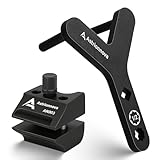
- All-in-One Suspension Tool Set – This 2-piece kit combines a compact strut spreader tool with a high-leverage lower control arm prying tool, giving you the core steering & suspension tools needed for safe, fast strut, hub and control arm service in one professional set.
- Universal Fit for Modern Vehicles – The precision-machined spreader end works as a universal suspension strut & hub spreader tool, knuckle spreader tool and hub spreader tool, ideal for many FWD, import and domestic vehicles. Perfect as your go-to strut removal tool and strut tool in tight suspension spaces.
- Built for Ball Joint & Control Arm Jobs – Engineered to function as a reliable ball joint removal tool and ball joint separator, this kit supports clean separation at the lower control arm and knuckle while helping protect bushings, boots and surrounding components—no more unsafe pry bar tricks.
- High-Leverage, Safer Prying Design – The reinforced prying tool pairs with a 1/2" drive breaker bar for controlled lifting and positioning, making it an ideal control arm pry tool and control arm tool. Gain stable leverage under load without slipping, bending or damaging critical suspension parts.
- Professional-Grade Suspension Tools – Forged from heavy-duty steel for repeat daily use, this combo covers key tasks normally requiring multiple tools: from strut spreader and strut separator tool to control arm removal tool and lower joint service. A shop-ready upgrade for mechanics and serious DIYers who want efficient, damage-free suspension work.
This product presentation was made with AAWP plugin.