
NHTSA ID Number: 10187626
Manufacturer Communication Number: 040089015V
Summary
This bulletin provides information on Warranty Administration – Required Operating Procedures – 8 Points (U.S. Only).
301 Affected Products
Vehicles
| MAKE | MODEL | YEAR |
| BUICK | CASCADA | 2016-2019 |
| BUICK | ENCLAVE | 2015-2021 |
| BUICK | ENCORE | 2015-2021 |
| BUICK | ENCORE GX | 2020-2021 |
| BUICK | ENVISION | 2016-2021 |
| BUICK | LACROSSE | 2015-2019 |
| BUICK | REGAL | 2015-2020 |
| BUICK | VERANO | 2015-2017 |
| CADILLAC | ATS | 2015-2019 |
| CADILLAC | CT4 | 2020-2021 |
| CADILLAC | CT5 | 2020-2021 |
| CADILLAC | CT6 | 2016-2020 |
| CADILLAC | CTS | 2015-2019 |
| CADILLAC | ELR | 2015-2017 |
| CADILLAC | ESCALADE | 2015-2021 |
| CADILLAC | ESCALADE ESV | 2015-2021 |
| CADILLAC | SRX | 2015-2016 |
| CADILLAC | XT4 | 2019-2021 |
| CADILLAC | XT5 | 2017-2021 |
| CADILLAC | XT6 | 2020-2021 |
| CADILLAC | XTS | 2015-2019 |
| CHEVROLET | 3500 | 2016, 2018-2020 |
| CHEVROLET | 4500HD | 2018-2020 |
| CHEVROLET | 5500HD | 2018-2020 |
| CHEVROLET | AVEO | 2018 |
| CHEVROLET | BLAZER | 2019-2021 |
| CHEVROLET | BOLT EV | 2017-2021 |
| CHEVROLET | CAMARO | 2015-2021 |
| CHEVROLET | CAPRICE | 2015-2017 |
| CHEVROLET | CAPTIVA | 2015 |
| CHEVROLET | CITY EXPRESS | 2015-2017 |
| CHEVROLET | COLORADO | 2015-2021 |
| CHEVROLET | CORVETTE | 2015-2021 |
| CHEVROLET | CRUZE | 2015-2019 |
| CHEVROLET | EQUINOX | 2015-2021 |
| CHEVROLET | EXPRESS | 2015-2021 |
| CHEVROLET | IMPALA | 2015-2020 |
| CHEVROLET | LOW CAB 4500 | 2017 |
| CHEVROLET | LOW CAB 5500 | 2017 |
| CHEVROLET | LOW CAB FORWARD 6500 | 2018 |
| CHEVROLET | MALIBU | 2015-2021 |
| CHEVROLET | N300 | 2018 |
| CHEVROLET | N300 MAX | 2017 |
| CHEVROLET | SILVERADO 1500 | 2017-2021 |
| CHEVROLET | SILVERADO 2500 | 2015-2021 |
| CHEVROLET | SILVERADO 3500 | 2017, 2021 |
| CHEVROLET | SILVERADO 4500HD | 2019-2020 |
| CHEVROLET | SONIC | 2015-2020 |
| CHEVROLET | SPARK | 2015, 2018-2021 |
| CHEVROLET | SPARK EV | 2015-2017 |
| CHEVROLET | SS | 2015-2017 |
| CHEVROLET | SUBURBAN | 2015-2021 |
| CHEVROLET | TAHOE | 2015-2021 |
| CHEVROLET | TRAILBLAZER | 2021 |
| CHEVROLET | TRAVERSE | 2015-2021 |
| CHEVROLET | TRAX | 2015-2021 |
| CHEVROLET | VOLT | 2015-2019 |
| GMC | ACADIA | 2015-2021 |
| GMC | CANYON | 2015-2021 |
| GMC | SAVANA | 2015-2021 |
| GMC | SIERRA 1500 | 2019-2021 |
| GMC | SIERRA 2500 | 2015-2021 |
| GMC | SIERRA DENALI | 2015-2019 |
| GMC | TERRAIN | 2015-2021 |
| GMC | YUKON | 2015-2021 |
| GMC | YUKON XL | 2015-2021 |
SEOCONTENT-START
Service Bulletin Bulletin No.: 04-00-89-015V
Date: December, 2020
WARRANTYADMINISTRATION
Subject: Warranty Administration – Required Operating Procedures – 8 Points (U.S. Only)
Models: 2021 and Prior GM Passenger Cars and Trucks
Attention: This service bulletin does not apply to GM of Canada Service Agents. GM of Canada
Agents should reference the General Motors of Canada Company Service Policies and
Procedures Manual.
This bulletin has been revised to add the 2021 Model Year and update the text in multiple
sections throughout the bulletin. Please discard Corporate Bulletin Number 04-00-89-015U.
The following 8 points are taken from the GM Service
Policies & Procedure Manual (P&P). They represent
key GM requirements for service operations. For
complete details of all policies and procedures, please
refer to the GM Service Policies & Procedures Manual
using the “Sales, Service, & Parts Policy and
Procedures” Quick Link in the Service section of
GlobalConnect.
These are minimum control requirements for work
performed on behalf of GM. Dealers have the discretion
to establish more stringent control requirements for
their dealership with regard to work performed on
behalf of GM, as well as customer pay and
internal work.
1. AUTHORIZATION TO PERFORM
REPAIR(S)
Each job card for work performed on behalf of GM must
be signed by the customer authorizing the Service
Agent to perform the requested service/repairs.
Authorization must be obtained at initial write-up and
prior to any repairs being performed. An authorization
to perform repairs statement must be included on every
job card. It is this statement customer(s) must
acknowledge (see example below).
“I hereby authorize the repair work above to be done
along with the necessary material and agree that you
are not responsible for loss or damage to the vehicle or
articles left in the vehicle in case of fire, theft, or any
cause beyond your control or for any delays caused by
unavailability of parts or delays in part shipments by the
supplier or transporter. Thereby grant you or your
employees permission to operate the vehicle herein
described on streets, highways or elsewhere for the
purpose of testing and/or inspection. An express
mechanic’s lien is hereby acknowledged on above
vehicle to secure the amount of repairs hereto.” Any
warranties on products sold hereby are those provided
by the manufacturer. The seller hereby expressly
disclaims all warranties, express or implied, including
any implied warranty of merchantability or fitness for a
particular purpose and the seller neither assumes nor
authorizes any other person to assume for it liability in
connection with the sale of said products. Any limitation
contained herein does not apply where prohibited
by law.”
_________________________________
Customer Signature
Page 2 December, 2020 Bulletin No.: 04-00-89-015V
There is to be a clear understanding of responsibility for
all charges at the time the job card is written and while
the customer is present. Customer must be provided a
copy of the initial write-up document.
Acceptable Customer Signatures
• Customer signature under the authorization to
perform repair statement on the job card at the
time of original write up.
• Early bird envelope or drop off form completed by
the customer. The early bird envelope or drop off
form must be attached to the job card.
• Documentation such as a hand-written note or
email provided by the customer prior to the initial
job card write up documenting the service
requests. The documentation must be attached to
the job card.
• Signed pre-write up worksheet, as long it contains
all required information (refer to the GM Service
Policies & Procedure Manual Article 6.2.2). The
pre-write up worksheet must be attached to the
job card.
• Electronic authorization (e.g. obtained by tablet),
as long as it is obtained prior to the repairs being
performed and customer acknowledges
authorizing the repairs. E-signatures must be
transferred to the job card and subsequently
deleted.
Customer Authorization Unavailable
• If Service Agent is unable to obtain one of the
above acceptable customer authorizations,
service management must state the reason and
sign on the authorization line on the job card, prior
to any repairs being performed. Service
management approval (explanation, date, time,
and signature/initials) is required.
• Service Agent-owned vehicles, including new and
used vehicles in inventory, service management is
to sign the job card authorizing the work prior to
repair. Service management approval
(explanation, date, time, and signature/initials) is
required. PDIs and Required Field Actions (ZFAT
and ZPDI Transaction Types) are excluded from
this requirement.
Reference: GM Service Policies & Procedures Manual
Article 6.2.2
2. SERVICE MANAGEMENT
APPROVALS AND TRANSACTION
AUTHORIZATIONS
Service management approval in the form of a
signature (or initials), date, time and explanation
documents the supervision and consent of Service
Agent facility service management for all scenarios.
Service Management Approval Required
The following authorizations must be documented on
the job card separately.
Item When Authorization is
Required Other Related Requirements
Customer Signature Not
Available
Prior to Work Being
Performed
Service Management approval must explain why the customer signature
was not available.
Warranty on Dealer-
Owned Inventory
Prior to Work Being
Performed
Excludes ZFAT and ZPDI Transaction Types. Service Management must
also sign on the authorization to repair line of the job card.
Added Operation
(Add Ons)
Prior to Work Being
Performed
Must be first inspected and verified by service management before it is
added to the job card. Includes added operations when servicing dealerowned
inventory (excluding added lines for open Required Field
Actions). Customer authorization required prior to work performed.
When two or more of the following situations apply to
the same job card, Service Management may
document a single authorization (Signature/initials,
date, time) with a separate explanation to support each
item authorized.
Item When Authorization is
Required Other Related Requirements
Other Labor Hours (Auth
Code E)
Prior to First Transaction
Submission
Service management is responsible for reasonableness of OLH
requested and validation that technician comments and time ticket
documentation support time requested.
Repeat Repairs –
Previous job card
(comeback) (Auth
Code R)
Prior to Transaction
Submission or at the
Time of First Rejection
Service Management is responsible for determining that current repair is
GM responsibility and not a result of previous improper dealer
workmanship or diagnosis. Authorization must explain how it was
determined that repair is not a comeback.
Repeat Repairs – Same
job card (Pyramiding)
(Auth Code R)
Prior to Transaction
Submission or at the
Time of First Rejection
Service Management is responsible for determining that all repairs on
the job card are GM responsibility and not a result of lack of proper
diagnosis.
Bulletin No.: 04-00-89-015V December, 2020 Page 3
Straight Time (ST)
Exceeding 2 Hours
Prior to First Transaction
Submission
Service management is responsible for the reasonableness of straight
time requested.
Policy Adjustments (Auth
Code A)
Prior to First Transaction
Submission
If the amount requested is more than $500 beyond the Policy Evaluation
Tool result, pre-approval is required via the Aftersales Empowerment
Portal
Auth Codes H (excess
net amount), P (excess
part amount), and M
(odometer discrepancy)
Prior to Transaction
Submission or at the
Time of First Rejection
Service Management explanation must support reason for authorization
request.
Customer
Reimbursements up
to $1000
Prior to First Transaction
Submission
Refer to the GM Service Policies & Procedures Manual Article 6.4.1 for
details.
Vehicle payments up to
$1000 (Labor Op
0600005)
Prior to First Transaction
Submission Refer to the latest version of Service Bulletin 11-00-89-005 for details.
Incidental expenses up
to $500 (Labor Op
0600015)
Prior to First Transaction
Submission Refer to the latest version of Service Bulletin 11-00-89-005 for details.
Wholesale Pre-Approval Required via the
Empowerment Portal
Dealer pre-approval requests must be submitted via the
Dealer Aftersales Empowerment Portal on
GlobalConnect.
Item When Authorization is
Required Other Related Requirements
Policy Adjustments (Auth
Code A) more than $500
beyond the Policy
Evaluation Tool result
Prior to Repairs
A copy of the Policy Evaluation Tool result and the approved portal
request must be attached to the transaction. The Policy Evaluation Tool
must be ran for each repair/transaction.
Car Rentals 7 or
more Days
By Seventh Rental Day,
and Final #Days prior to
First Transaction
Submission
Rental days must be supported by the repair performed. Day by day
time-line of rental and repair status required. SPAC case number, if
applicable, must be provided.
Vehicle Payments over
$1000 (Labor Op
0600005)
Prior to Repairs Refer to latest version of Service Bulletin 11-00-89-005 for related
policies.
Incidental Expenses over
$500 (Labor Op
0600015)
Prior to Repairs Refer to latest version of Service Bulletin 11-00-89-005 for related
policies.
Use of a Non-GM Part for
any Repair Covered
by GM
Prior to Repairs Refer to the GM Service Policies & Procedures Manual Article 1.1.2 and
Article 3.8 for disclosure requirements.
When a Repair is More
Cost Effective but an
Engine or Transmission
Assembly is Replaced for
Customer Satisfaction
Prior to Repairs DO NOTcheck “Customer Enthusiasm” indicator on the transaction
unless absolutely no defects were found in any vehicle component.
Any Policy on a Vehicle
Covered by an
Aftermarket Service
Contract
Prior to Repairs Service Management must validate that repair is not covered by an
active service contract.
Any Policy on a Buyback
Vehicle Prior to Repairs Use of Policy Evaluation Tool still required
CPO Repairs involving a
CPO Restricted Labor
Operation
Prior to Repairs Refer to CPO Program Information
Warranty Block Override Prior to Repairs Refer to the GM Service Policies & Procedures Manual Article 4.7 for
details on which repair types require approval
Page 4 December, 2020 Bulletin No.: 04-00-89-015V
Courtesy Transportation
outside of warranty
during Field Action
repairs when the Field
Action Bulletin does not
include provisions for
Courtesy Transportation
Prior to Providing
Courtesy Transportation
Per the GM Service Policies & Procedures Manual Article 4.4 and Article
10.10 and latest version of Courtesy Transportation Service Bulletin 07-
00-89-037.
Warranty Support Center (WSC) Approval Required
The following claim types must be routed for “GM
Authorization” in Global Warranty Management.
Item When Authorization is
Required Other Related Requirements
Tire Replacements over
12,000 Miles
At time of Transaction
Submission
Transaction must contain the tire proration amount in the Service Agent/
Customer Participation field. Deviations from proration must be
supported with solid business case.
OLH Amounts (Auth
Code E) Beyond Dealer
Empowerment Limits
At time of Transaction
Submission WSC may require attachments to support the OLH request.
Customer
Reimbursements
over $1000
At time of Transaction
Submission
Refer to the GM Service Policies & Procedures Manual Article 6.4.1 for
policies related to customer reimbursement.
Authorizations R, H, P
and M Beyond Dealer
Empowerment Level
At time of Transaction
Submission
Service Management explanation must support reason for authorization
request.
The Service Agent must designate one person
responsible and accountable for all approvals issued by
service management. This would be the service
manager or service director. When portions of
responsibilities are delegated to other members of
service management, those who become empowered
are to be salaried members of the service management
team, responsible for supervision of employees, the
performance of the service department, and the
responsibility for administering the GM warranties.
Service technicians, dispatchers, warranty
administrators, other support, or hourly personnel are
not to be empowered for these types of management
approvals. All such delegation of approval must be
monitored by the service manager or director, on a
routine basis, for compliance with GM Service Policies
and Procedures.
Reference: GM Service Policies & Procedures Manual
Article 6.4
3. DETAILS OF CONCERN, CAUSE AND
CORRECTION
Details of Concern
Details of each customer concern are to be noted at the
time of job card write-up by recording the customers’
problem description. The service advisor is responsible
for confirming each customer concern as written on the
job card. Vague descriptions such as “repair oil leak,”
“engine stalls,” “install SOP”, “repair noise” or coded
descriptions of customer concerns are not acceptable.
If a customer concern is added on after initial write-up,
the service agent is required to follow the requirements
of the GM Service Policies & Procedures Manual
Article 6.2.4.
Details of Cause
The technician must document on the shop copy of the
job card all on-board diagnostic trouble codes (DTCs),
test equipment readings, suspension alignment before/
after readings, brake rotor/drum before/after readings,
appropriate specifications, adjustments, circuit
numbers, descriptive locations and indicators. Coded
descriptions are not acceptable. Battery replacements
require the test result print out to be attached to the job
card. Technician documentation should include all
relevant observations and is not limited to the items
listed above. All technician documentation must be
traceable back to the technician performing the repair
on the associated job card. All diagnostic time claimed
must be substantiated by the technician’s comments.
Details of Correction
Technician(s) must document on the shop copy of the
job card the steps taken to correct the customer’s
concern in detail. Vague comments, such as replaced
engine, turned rotors, etc. are not acceptable. The
comments must be traceable back to the technician
performing the repair on the associated job card.
Control Module Reprogramming
When repairs involve module reprogramming,
technicians MUST document on the shop copy of the
job card the Warranty Claim Code provided from SPS
when programming is complete. The Code must be
entered in the “SPS Warranty Claim Code” field of the
transaction. For additional details on SPS Warranty
Claim codes and module reprogramming labor
operations, reference the latest version of Service
Bulletin 06-08-47-001.
Bulletin No.: 04-00-89-015V December, 2020 Page 5
Replacement of Engine/Transmission Assemblies
Where a complete transmission/engine assembly is
replaced, It is recommended that Service Agents
complete the Cost Comparison Worksheet prior to
repair and attach it to the job card. Restricted dealers
who are required to contact GM prior to engine/
transmission assembly replacement are required to
complete and retain the Cost Comparison Worksheet.
Reference: GM Service Policies & Procedures Manual
Article 6.2.4
4. LABOR TIME/HOURS
OLH (Other Labor Hours)
• Technician must record on the job card the reason
for OLH. Technician must detail failure and steps
taken to facilitate repairs. Vague comments such
as metal throughout are not acceptable.
• Separate on/off time punches are required on the
technician’s time ticket for the OLH time claimed
on each labor operation with OLH. The separate
time punch for OLH must be distinguishable from
the other punch times for that job card, and
support the amount of time claimed to GM on the
transaction.
Note: Punching on/off physical job cards does not
meet technician timekeeping requirements and is
non-compliant and unacceptable.
• Service management approval, in the form of an
explanation with date, time and signature (or
initials) is required on the job card prior to initial
transaction submission. Service management is
responsible for the reasonableness of the OLH
submitted and to ensure that technician comments
adequately reflect the time involved. Validation of
OLH accrued on the technician time ticket is
required.
• A technician does not need to exhaust base time
to receive OLH.
• Technician inefficiency or lack of training is not
sufficient justification for OLH. OLH is not an
extension of base time.
• Phone time with call center technical support
activity cannot be charged to OLH. Normal road
test to verify repairs are part of Strategy-Based
Diagnostics and are not eligible for OLH unless
the extenuating circumstance is documented and
approved by service management.
Diagnostic Time
GM follows “Strategy-Based Diagnosis/Symptom
Diagnosis”, which is an organized vehicle diagnostics
approach for finding the source/cause of a defined
problem or identified symptom. This is accomplished by
following consistent, systematic and logical steps
utilizing published diagnostic procedures and
equipment. For example, finding the source of an
electrical problem by following the trouble trees and/or
diagnostic charts, or finding a driveability problem using
a scan tool such as Techline equipment and following
the trouble code diagnostic charts.
Handling Variable Diagnostic Time: Due to the
nature of select repairs, a variable diagnostic time
allowance may be listed separately in the Labor Time
Guide as an Add Time. The amount of variable time
claimed must be submitted in the “Diagnosis Time”
Labour field, and substantiated by technician
comments and steps taken to facilitate the repair.
• Diagnosis time submitted must be supported by
individual and specific on/off punch times on the
technician’s time ticket.
• Service managers are responsible for assuring
complete technician documentation and the
reasonableness of diagnostic time claimed.
• Diagnostic/add time claimed above the variable
published allowance shall be treated as OLH and
must be approved and documented as such.
• Refer to Service Bulletin 18-NA-263 for further
information.
Straight Time
Straight time (ST) is time not published in the labor time
guide. The technician must document all steps taken to
support repair. Management is responsible for the
reasonableness of the request. Straight Time more
than 2 hours must be authorized by service
management prior to the first transaction submission.
Straight time is to be submitted in the Base Labor field
of the transaction.
Reference: GM Service Policies & Procedures Manual
Article 6.3
5. TECHNICIAN IDENTIFICATION AND
ACCOUNTING OF LABOR TIME
All standard warranty and policy repair time must be
documented on the technician’s time ticket by job card.
This includes the job card number and technician ID,
along with actual date and start and stop time(s) while
on premises the same day.
All warranty and policy repair time for any customer
concerns added to the job card (add-ons) after the
initial job card write-up and other labour hours (OLH)
must have individual and specific on/off punch times on
the technician’s time ticket by job card line for repair(s)
performed.
Note: Punching on/off physical job cards does not
meet technician timekeeping requirements and is
non-compliant and unacceptable.
The following are related to the above requirements:
Multiple Vehicle Repairs
Technicians may not be clocked on two or more
(multiple) job cards at the same time during standard
warranty and/or policy repairs.
A technician may use a single on and off punch time on
his/her time ticket when performing multiple vehicle
repairs only under the following circumstances:
• When reprogramming multiple vehicles as part of
the same recall or service update bulletin
• When performing multiple vehicle inspections with
no part installation as part of the same recall or
service update bulletin
Page 6 December, 2020 Bulletin No.: 04-00-89-015V
In these cases, A VIN list from the “Open Recall
Report”, or an Investigate Vehicle History (IVH) screen
prints must be attached to the job card.
Multiple/Lateral Technicians
It is permissible for multiple technicians to work on the
same vehicle, provided all warranty and policy repair
time is noted on the technician time ticket by job card
and unique technician IDs are notated.
Brand Maintenance Programs
Technicians who exclusively perform oil changes/tire
rotations/MPI services are waived from individual time
requirements. The technician identification must be
shown on the technician’s time ticket by job card.
Technicians performing standard warranty and/or policy
repairs in addition to oil changes/tire rotations/MPI
services are required to follow established time
documentation provisions stated in the GM Service
Policies & Procedures Manual Article 6.2.5 for standard
warranty and/or policy repairs. The technician
identification must be shown on the technician’s time
ticket by job card.
Broken Time Clocks
A broken time clock must be repaired or replaced
immediately. Service management must write the
actual start and stop time(s) on the technician time
ticket. The time ticket must be signed or initialed by
service management for each job card.
Reference: GM Service Policies & Procedures Manual
Article 6.2.5
6. PROPER DOCUMENTATION AND
RETENTION OF WARRANTY PARTS
All parts information including name, number, quantity,
and price is to be recorded on, or attached to the job
card. All parts are to be identified to the respective
repair case and cross referenced (line-coded) on the
job card or attached parts sheet.
• Following a warranty repair, all parts are to be
turned into the parts department by technicians for
retention and/or return.
• Warranty parts retained must be identified with the
job card number. It is recommended to also
identify the last 8 digits of the VIN and job
card date.
• Service Agent’s retention of parts should provide
for easy retrieval and be kept in a clean, well-lit,
and ventilated area.
• Service Agent(s) are to retain for inspection all
warranty parts (except core parts – core parts
section below) as directed in the GM Service
Policies & Procedure Manual Article 5.15 (unless
directed otherwise by GM Representative) from
the paid date or until scrapped by a GM
representative, whichever occurs first. Any defects
should be clearly marked (if identifiable).
• If the part is past the retention period, parts must
be scrapped/destroyed locally so they can never
enter commerce. Parts with core charges should
be returned to the appropriate core return center.
Under NO CIRCUMSTANCES are warranty/policy
parts to be sold for salvage value or installed on
ANY vehicle sold at retail, wholesale or salvage,
or used in ANY other application.
• Divisional maintenance related parts (e.g. cabin/
air filters) must follow the minimum retention
period stated above, with exception stated below:
• Oil filters for brand maintenance programs may
be disposed of immediately.
• Fluids are not required to be retained.
• For specific instructions on core retention, please
reference GM Service Policies & Procedures
Manual Article 7.5 – Core Return Policies.
• Tires that are not required to be returned to the tire
manufacturer are to be rendered unusable by
cutting a hole in the tire sidewall of at least one
inch in diameter with a hole-saw or drill.
All Warranty core parts (except ESC parts) must be
retained for 72 hours beyond receipt of the Transaction
Summary showing credit. Service Agents must check
for Warranty Parts Center (WPC) requests through the
Global Warranty Management system. If no WPC
return request is received within 72 hours of the Service
Agent receiving a GWM Transaction Summary Report
showing credit, the specified core part must be shipped
to the CCA Core Return Center within 21 days.
WPC requests for part returns must be given priority
over returning to CCA Core Return Center. Core parts
that are returned to the CCA Core Return Center prior
to WPC parts request(s) will be debited.
Electronic Service Center (ESC) parts should be
returned to the ESC within 30 days to receive core
credit. Refer to the GM Service Policies & Procedures
Manual for complete details. The WPC rarely requests
ESC parts from Service Agents. Service Agents should
return exchanged units promptly to the ESC, and the
WPC will obtain any ESC parts that are needed directly
from the ESCs.
Reference: GM Service Policies & Procedures Manual
Article 5.5 and latest version of Service Bulletin
99-00-89-019
7. ACCURATE SUBLET CHARGES AND
RECEIPTS
The following policies apply for repairs sublet by the
Service Agent to repair shops (including other repair
locations owned by the Service Agent):
• Sublet repair reimbursement is limited to the lower
of the actual sublet invoice or the Service Agent’s
comparable allowance, calculated at Service
Agent parts & labor allowances and published GM
labor time(s). Any discounts or allowances applied
to the sublet invoice or made available to the
Service Agent for non-warranty repairs are to be
also applied to the sublet reimbursement amount.
Repairs are not to exceed the Service Agent’s
parts and/or labor allowance as set forth in the
Parts and Accessories Policies and Procedures
Manual for reimbursement details when non-GM
parts are used.
• Service Agents are not to solicit charges from
sublet shop higher than those customarily charged
by the shop
Bulletin No.: 04-00-89-015V December, 2020 Page 7
• Service Agents are to supply the sublet facility
with GM parts which are used in the performance
of the sublet repair. Service Agents are eligible for
the appropriate handling allowance.
• Sublet repairs must not be shown on a warranty
transaction as a Service Agent performed repair. If
repair is performed by the Service Agents’ body
shop, then warranty transaction must reflect labor
and parts as such and sublet net item is not
allowed.
• All job cards with sublet invoices are to be cross
referenced. Sublet invoices are to contain VIN,
date of repair, and a description of repairs
performed.
• Sublet invoices must be attached to the job card
and be a part of the vehicle history file.
Reference: GM Service Policies & Procedures Manual
Article 5.4 and Article 6.4
8. ADD-ON CUSTOMER CONCERN
AFTER JOB CARD WRITE-UP
Any warranty/policy concern not expressed orally or in
writing by the customer at initial write-up must be first
inspected and verified by the service manager before it
is added to the job card. Once the service manager
determines that the additional repair is necessary and
approves adding the line to the job card, the line may
be added by the service manager, service consultant or
any non-technical service department employee. The
add-on line must be added to the front of the job card
with all other customer concerns. The service manager
must document their authorization (date, time,
signature/initials and explanation) on the job card prior
to work performed. There must be a clear
understanding how the additional work became a
concern (i.e. customer called back, technician found
during multi-point inspection), or other supporting
documentation. The explanation must specifically
describe what the service manager saw or verified
upon inspection or road test. Multiple additional
concerns must each contain this approval. The
customer must be contacted prior to work being
performed for their permission to continue with the
repair(s). The date and time the customer provided
permission must also be documented on the job card.
Individual and specific on/off punch times by job card
line are required on the technician’s time ticket for
add-on repair(s) performed. The separate time punch
for add-ons must be distinguishable from the other
punch times for that job card.
Note: Punching on/off physical job cards does not
meet technician timekeeping requirements and is
non-compliant and unacceptable.
Regardless of the date, subsequent warranty customer
concerns based on multi-point vehicle inspections are
considered added customer concerns and will be
treated as such.
When adding lines to job cards involving dealer-owned
inventory for completion of Safety, Emissions and
Non-Compliance Recalls, service manager approval is
not required. Technician punch time requirements still
apply.
Customer concerns not documented on early bird
envelopes or drop-off forms that are added to the job
card are considered add-ons and must be approved by
the service manager prior to work being performed.
Reference: GM Service Policies & Procedures Manual
Article 6.3
Frequently Asked Questions
Frequently Asked Questions
Q: Is straight time considered to be OLH and how does
it relate to time accounting?
A: Straight time is not considered to be OLH. Straight
time exceeding 2 hours needs to be authorized by
service management prior to claim submission. When a
technician encounters extenuating circumstances in
performing a repair that would typically be submitted
as OLH.
Q: Do I have to punch on/off per job card line for
warranty/policy repairs?
A: If one technician is working on the vehicle, he/she is
only required to punch on/off their time ticket once per
job card, unless the job card has an add-on line or
involves time claimed in the Diagnosis Time or Other
Labor Time (OLH) Labour section fields.
Q: Do time punches on job cards qualify as acceptable
time documentation?
A: No. The only acceptable time documentation is what
is recorded on the time ticket for the technician.
Technician timekeeping on the job card is
non-compliant and unacceptable.
Q: I have a job card with two or more (multiple)
warranty lines that does not require any additional
add-ons or OLH. How many time punches are required
for this repair?
A: Two. One at the start of the repair and one at the end
of all repairs.
Q: At the initial write-up of the job card, there were two
or more (multiple) warranty lines on the card. It was
discovered that the vehicle had an open recall and that
line was added after initial write-up. Do I need to secure
the Service Manager’s approval for the add line and do
I need to punch on/off for the repair?
A: Yes. Technicians must obtain service management
approval for add-ons and punch on/off the time ticket
separately for the recall repair (add-on line). If the job
card is written on a dealer-owned inventory vehicle,
and the add-on line involves an open Required Field
Action per IVH, service manager approval is not
required. The separate on/off punch time requirement
for the add-on repair still applies.
Page 8 December, 2020 Bulletin No.: 04-00-89-015V
Q: How must the technician time ticket be
documented?
A: Each job card that a technician works on, regardless
of the number of warranty lines on the ticket, must
contain the following:
• Job Card Number
• Technician
• Actual date of the repair
• Start and stop time for the repair (electronic or
manual clock on/off; cannot be handwritten)
Q: Can a technician work on multiple vehicles at once?
A: Yes, as long as the repairs are of the following types:
• Single standard warranty and/or policy repair
event simultaneously with a customer and/or
internal repair event
• Service Update Bulletin or Field Action that
involves reprogramming
• Service Update Bulletin or Field Action which
requires an inspection (no parts replacement)
Note: For service update bulletins or field actions, when
multiple VINs are worked on at once, the VIN list from
the “Open Recall” report or an IVH screen print must be
attached to the job card. (Per GM Service Policies &
Procedures Manual, the documentation must be
retained for a minimum of 24 months.)
Q: As the technician is not required to punch on/off of
customer pay work, how do I handle time accounting
documentation for repairs that may have started out as
customer pay, but end up being policy?
A: The Service Manager must document the situation
in detail on the job card, along with the date, time and
signature (or initials) per the standard service
management authorization procedure.
Q: If my total repair elapsed time is on the customer
pay line of the job card, but the job card had one
customer pay line and two warranty lines on the same
ticket, would I be debited back for the repairs?
A: No, as long as the total elapsed time on the time
ticket is reasonable to complete all the repairs outlined
on the job card.
Q: Is Certified Pre-Owned (CPO) considered a Brand
Maintenance Program?
A: For the oil change portion of the program the answer
is yes and technicians should follow the Brand
Maintenance guidelines outlined in this bulletin. All
other repairs under the warranty portion of the CPO
program should follow the warranty guidelines outlined
in this bulletin.
Q: There was only one single labor operation that
applied to both a left and right side component. The
technician repaired/replaced both components, but
Global Warranty Management (GWM) will not allow me
to submit two transactions using the same labor
operation. Therefore, both repairs were claimed on the
same transaction and OLH was utilized to claim the
additional labor involved. What are the service
management authorization and technician time
accounting requirements for the OLH?
A: In this situation, the OLH field of the transaction is
being used to claim for standard repair time. Therefore,
authorization and time accounting requirements for the
“OLH” do not apply. These requirements only apply to
true OLH, which represents labor to address
extenuating circumstances that are not part of the
published repair procedure for that component. OLH
submitted in this situation should not exceed the
published base time for the single (right or left)
component repair. Any OLH above the published base
time would be considered true OLH and would require
separate on/off time punches and Service Management
authorization.
SEOCONTENT-END
NHTSA ID Number: 10068971
Manufacturer Communication Number: 04-00-89-015E
Summary
SUMMARY TO BE PROVIDED ON A FUTURE DATE.
1 Associated Document
Service Bulletin Document
Bulletin No.: 04-00-89-015E
Date: June, 2013
SB-10068971-5448.pdf 551.298KB
NHTSA ID Number: 10134741
Manufacturer Communication Number: 04-00-89-015E
Summary
This technical bulletin provides a revision for 04-00-89-015D to update content and incorporate the U.S. version of Bulletin 12-00-89-003.
1 Associated Document
Manufacturer Communications
Bulletin No.: 04-00-89-015E
Date: Jun-2013
MC-10134741-9999.pdf 129.864KB
NHTSA ID Number: 10064395
Manufacturer Communication Number: 04-00-89-015F
Summary
SUMMARY TO BE PROVIDED ON A FUTURE DATE.
1 Associated Document
Service Bulletin Document
Bulletin No.: 04-00-89-015F
Date: January, 2014
NHTSA ID Number: 10137772
Manufacturer Communication Number: 04-00-89-015F
Summary
This warranty administration bulletin provide policy information of the JOB CARD, for a repair on vehicles and what is acceptable – customer authorization; Service manager approvals and transaction authorization; Details of concern, cause and correction; Labor Time; Technician ID and accountability of labor time; Proper documentation and retention of warranty parts; Accurate sublet charges and receipts; Add on concerns after the Job Card has been written.
1 Associated Document
Manufacturer Communications
Bulletin No.: 04-00-89-015F
Date: January, 2014
NHTSA ID Number: 10064396
Manufacturer Communication Number: 04-00-89-015G
Summary
SUMMARY TO BE PROVIDED ON A FUTURE DATE.
1 Associated Document
Service Bulletin Document
Bulletin No.: 04-00-89-015G
Date: January, 2014
SB-10064396-9133.pdf 543.688KB
NHTSA ID Number: 10137775
Manufacturer Communication Number: 04-00-89-015G
Summary
This warranty administration bulletin provide policy information of the JOB CARD, for a repair on vehicles and what is acceptable – customer authorization; Service manager approvals and transaction authorization; Details of concern, cause and correction; Labor Time; Technician ID and accountability of labor time; Proper documentation and retention of warranty parts; Accurate sublet charges and receipts; Add on concerns after the Job Card has been written.
1 Associated Document
Manufacturer Communications
Bulletin No.: 04-00-89-015G
Date: January, 2014
MC-10137775-9999.pdf 543.688KB
NHTSA ID Number: 10114296
Manufacturer Communication Number: 04-00-89-015H
Summary
This warranty administration bulletin provide policy information of the JOB CARD, for a repair on vehicles and what is acceptable – customer authorization; Service manager approvals and transaction authorization; Details of concern, cause and correction; Labor Time; Technician ID and accountability of labor time; Proper documentation and retention of warranty parts; Accurate sublet charges and receipts; Add on concerns after the Job Card has been written.
1 Associated Document
Manufacturer Communications
Bulletin No.: 04-00-89-015H
Date: October, 2014
MC-10114296-9999.pdf 155.291KB
NHTSA ID Number: 10064397
Manufacturer Communication Number: 04-00-89-015I
Summary
SUMMARY TO BE PROVIDED ON A FUTURE DATE.
1 Associated Document
Service Bulletin Document
Bulletin No.: 04-00-89-015I
Date: November, 2014
SB-10064397-9133.pdf 1590.562KB
NHTSA ID Number: 10114271
Manufacturer Communication Number: 04-00-89-015I
Summary
This warranty administration bulletin provide policy information of the JOB CARD, for a repair on vehicles and what is acceptable – customer authorization; Service manager approvals and transaction authorization; Details of concern, cause and correction; Labor Time; Technician ID and accountability of labor time; Proper documentation and retention of warranty parts; Accurate sublet charges and receipts; Add on concerns after the Job Card has been written.
1 Associated Document
Manufacturer Communications
Bulletin No.: 04-00-89-015I
Date: November, 2014
MC-10114271-9999.pdf 1590.562KB
NHTSA ID Number: 10113745
Manufacturer Communication Number: 04-00-89-015J
Summary
This warranty administration bulletin communicates GM required operating procedures (U.S. only) for service operations.
1 Associated Document
Manufacturer Communications
Bulletin No.: 04-00-89-015J
Date: Mar-2015
MC-10113745-9999.pdf 318.591KB
NHTSA ID Number: 10112764
Manufacturer Communication Number: 04-00-89-015K
Summary
This warranty informational bulletin provides a list of all the required operating procedures and explains them out to what is acceptable and not.
1 Associated Document
Manufacturer Communications
Bulletin No.: 04-00-89-015K
Date: Mar-2016
MC-10112764-9999.pdf 347.978KB
NHTSA ID Number: 10108641
Manufacturer Communication Number: 04-00-89-015L
Summary
This informational bulletin provides warranty policy information on required operating procedures.
1 Associated Document
Service Bulletin Document
Bulletin No.: 04-00-89-015L
Date: May, 2016
SB-10108641-5233.pdf 1863.057KB
NHTSA ID Number: 10089201
Manufacturer Communication Number: 04-00-89-015M
Summary
THIS WARRANTY ADMINISTRATION BULLETIN PROVIDES POLICY INFORMATION ON USING GM SERVICE POLICIES AND PROCEDURE MANUAL THAT REPRESENT KEY GM REQUIREMENTS FOR SERVICE OPERATIONS.
1 Associated Document
Service Bulletin Document
Bulletin No.: 04-00-89-015M
Date: June, 2016
SB-10089201-2280.pdf 1070.297KB
NHTSA ID Number: 10135239
Manufacturer Communication Number: 040089015N
Summary
This warranty administration bulletin provide policy information on required operating procedures.
1 Associated Document
Manufacturer Communications
Bulletin No.: 04-00-89-015N
Date: October, 2016
MC-10135239-9999.pdf 1866.213KB
NHTSA ID Number: 10137603
Manufacturer Communication Number: 04-00-89-015O
Summary
This warranty administration bulletin provide policy information on required operating procedures.
1 Associated Document
Manufacturer Communications
Bulletin No.: 04-00-89-015O
Date: May-2017
MC-10137603-9999.pdf 367.182KB
NHTSA ID Number: 10126065
Manufacturer Communication Number: 04-00-89-015P
Summary
This warranty administration bulletin provide policy information on required operating procedures.
1 Associated Document
Manufacturer Communications
Bulletin No.: 04-00-89-015P
Date: July, 2017
MC-10126065-9999.pdf 1866.677KB
NHTSA ID Number: 10140296
Manufacturer Communication Number: 04-00-89-015Q
Summary
This warranty administration bulletin provide policy information on required operating procedures.
1 Associated Document
Manufacturer Communications
Bulletin No.: 04-00-89-015Q
Date: August, 2017
MC-10140296-9999.pdf 1867.911KB
NHTSA ID Number: 10139208
Manufacturer Communication Number: 040089015R
Summary
This warranty administration bulletin provide policy information on required operating procedures.
1 Associated Document
Manufacturer Communications
Bulletin No.: 04-00-89-015R
Date: December, 2017
NHTSA ID Number: 10154627
Manufacturer Communication Number: 040089015T
Summary
This warranty administration bulletin provides policy information on required operating procedures.
1 Associated Document
Manufacturer Communications
Bulletin No.: 04-00-89-015T
Date: January, 2019
MC-10154627-9999.pdf 958.231KB
NHTSA ID Number: 10186105
Manufacturer Communication Number: 040089015V
Summary
This bulletin provides information on Warranty Administration ? Required Operating Procedures – 8 Points (U.S. Only).
1 Associated Document
Manufacturer Communications
Bulletin No.: 04-00-89-015V
Date: December, 2020
MC-10186105-9999.pdf 606.616KB
1 Associated Document
Manufacturer Communications
Bulletin No.: 04-00-89-015V
Date: December, 2020
MC-10187626-9999.pdf 606.616KB
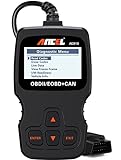
- CEL Doctor: The ANCEL AD310 is one of the best-selling OBD II scanners on the market and is recommended by Scotty Kilmer, a YouTuber and auto mechanic. It can easily determine the cause of the check engine light coming on. After repairing the vehicle's problems, it can quickly read and clear diagnostic trouble codes of emission system, read live data & hard memory data, view freeze frame, I/M monitor readiness and collect vehicle information
- Sturdy and Compact: Equipped with a 2.5 foot cable made of very thick, flexible insulation. It is important to have a sturdy scanner as it can easily fall to the ground when working in a car. The AD310 OBD2 scanner is a well-constructed mechanic tool with a sleek design. It weighs 12 ounces and measures 8.9 x 6.9 x 1.4 inches. Thanks to its compact design and light weight, transporting the device is not a problem. The buttons are clearly labelled and the screen is large and displays results clearly
- Accurate Fast and Easy to Use: The AD310 scanner can help you or your mechanic understand if your car is in good condition, provides exceptionally accurate and fast results, reads and clears engine trouble emission codes in seconds after you fixed the problem. This device will let you know immediately and fix the problem right away without any car knowledge. No need for batteries or a charger, get power directly from the OBDII Data Link Connector in your vehicle
- OBDII Protocols and Car Compatibility: Many cheap scan tools do not really support all OBD2 protocols. AD310 scanner as it can support all OBDII protocols such as KWP2000, J1850 VPW, ISO9141, J1850 PWM and CAN. This device also has extensive vehicle compatibility with 1996 US-based, 2000 EU-based and Asian cars, light trucks, SUVs, as well as newer OBD2 and CAN vehicles both domestic and foreign. Pls confirm with our customer service whether it is compatible with your vehicle before purchasing
- Home Necessity and Worthy to Own: This is an excellent code reader to travel or home with as it weighs less and it is compact in design. You can easily slide it in your backpack as you head to the garage, or put it on the dashboard, this will be a great fit for you. The AD310 is not only portable, but also accurate and fast in performance. Moreover, it covers various car brands and is suitable for people who just need a code reader to check their car

- Multi-Functions - Practical Multi-Functions OBD2 code reader features built-in OBD2 DTC lookup library, which help you to determine the cause of the engine light, read code, erase code, view freeze frame, I/M ready, vehicle information, data flow, real-time curve, get vehicle speed information, calculate load value, engine coolant temperature, get engine speed.
- Wide Capability - Supports 9 protocols compatible with most 1996 US-Based, 2000 EU-Based and Asian cars, and newer OBD II & CAN domestic or import vehicles. Supports 6 languages - English,German, Dutch, Spanish, French, Italian.
- 2.8" LCD Display - Designed with a clear display 2.8" Large LCD screen - white backlight and contrast adjustment. No need any battery or charger, OBD reader gets the power directly from your vehicle through the OBDII Data Link Connector.
- Compact Design - Car diagnostic scanner is equipped with a 2.5 feet long cable and made of a very thick flexible insulator.There are 6 buttons on OBD2 Scanner:scroll up/down,enter/exit and buttons that quick query VIN vehicle number& the DTC fault code.
- ABS / Airbag codes NOT Supported - It is able to read and clear check engine information which is part of OBDII system, but it cannot work with non-OBDII systems, including ABS / Airbag / Oil Service Light, etc.

- 【Diagnose Check Engine Light in Seconds – No Mechanic Needed】The FOXWELL NT301 OBD2 scanner instantly reads & clears engine fault codes (DTCs) with one click. Simply plug into the 16-pin DLC port, turn ignition on, and get accurate results within seconds—No prior car knowledge required. Save hundreds on dealership fees by knowing exactly what’s wrong before you visit a shop. The #1 choice car scanner for DIYers and car owners who want to take control of their vehicle’s health
- 【Clear & Reset CEL with Confidence】Unlike cheap code readers that just erase codes temporarily, NT301 works like all professional vehicle code readers: It clears the check engine light only after you’ve fixed the underlying issue. If the problem isn’t fully repaired, the fault code will reappear. So you’ll never get a false pass. Use the foxwell scanner to verify your repair work and drive with peace of mind
- 【Sm-og Check Helper – Know Your Pass/Fail Status Before the Test】With dedicated one-click I/M readiness hotkeys and a simple Red-Yellow-Green LED indicator, you’ll instantly know if your vehicle is ready for annual testing. Built-in speaker provides clear audio feedback. No guesswork—just confidence before you head to the test center. One less thing to worry about when inspection day comes
- 【Advanced OBDII Modes – O- 2 Sensor & EVAP Testing】NT301 go beyond basic code reading with enhanced OBD2 modes. Run an EVAP system check to assess fuel tank condition, and use the O- 2 sensor test to optimize air-fuel ratio, boosting fuel economy, cutting em- issions, and saving you money at the pump. The code reader for cars and trucks is like having a mini em-issions lab in your glove box
- 【Live Data Graphing – Spot Engine Issues in Real Time】View and log live sensor data in easy-to-read graphs with this OBD2 scanner diagnostic tool. Monitor ox- ygen sensors, fuel trims, coolant temperature, RPM, and more to spot suspicious values instantly. This obd scanner gives you professional-grade insight without the pro price tag—a feature you won’t find on basic $20 car code readers

- Understand Your Check Engine Light – The ANCEL AD410 OBD2 scanner helps everyday drivers quickly read and clear engine-related fault codes, view code definitions, and understand why the check engine light is on before visiting a repair shop. With 42,000+ built-in DTC lookups, this car code reader helps reduce guesswork and makes basic vehicle diagnostics easier for beginners and DIY users
- Full OBD2 Diagnostics Made Simple – More than a basic engine code reader, this OBD2 scanner diagnostic tool supports key OBDII functions including reading/clearing codes, live data, freeze frame, I/M readiness, O2 sensor test, EVAP test, vehicle information, and MIL status. It helps you check your car’s condition, verify repairs after the issue is fixed, and communicate with mechanics more confidently
- Live Date & Real-time Vehicle Insights – View real-time engine data such as RPM, coolant temperature, fuel trim, oxygen sensor readings, and other available OBD2 parameters directly on the screen. These live data readings help you better understand how your vehicle is running, spot abnormal patterns, and make more informed repair decisions instead of relying only on a warning light
- Smog Check Readiness At A Glance – Use the I/M readiness function before a smog check or emissions inspection to see whether your vehicle’s monitors are ready. This OBD2 code scanner helps you confirm if recent repairs have brought the system back to a ready state, reducing the chance of failed inspections, retests, wasted trips, and unnecessary inspection fees
- Works With Most OBD2 Vehicles – Compatible with most 1996 and newer U.S.-based OBD2 cars, SUVs, and light trucks, as well as many 2000 and newer EU/Asian OBD2 vehicles. Supports major OBDII protocols including CAN, ISO9141, KWP2000, J1850 VPW, and J1850 PWM. This automotive diagnostic scanner is designed for wide vehicle coverage; please check compatibility with your vehicle before purchase
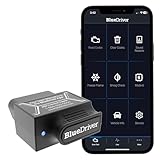
- [Diagnose Like a Pro] BlueDriver Pro is a professional OBD2 scanner and diagnostic tool that helps you scan, understand, and clear vehicle trouble codes with confidence. Turn your phone into a powerful car diagnostic scanner—no guesswork, no unnecessary repairs.
- [Read and Clear More Codes Than Ever] Read and clear more codes than basic car code readers. Access enhanced diagnostics for Check Engine, ABS, SRS, Airbag, TPMS, Transmission.
- [Verified Fixes and Real-Time Data] Get unlimited, technician-verified repair reports matched to your VIN, with definitions, causes, and confirmed fixes. Monitor live vehicle data as you drive, view freeze frames, check smog readiness, and analyze Mode 6 test results.
- [Wireless & Bluetooth Enabled] - Say goodbye to wires. BlueDriver connects with Bluetooth via your phone/tablet to a sensor that plugs into your car's OBDII port. Get all of the capabilities of an expensive code reader & scan tool without any annoying wires.
- [Broad Make & Model Coverage] Strong support for GM, Ford, Stellantis (RAM, Jeep, Chrysler), Toyota, Honda, Nissan, Mazda, Subaru, Hyundai, Mercedes-Benz, BMW, and VW.
This product presentation was made with AAWP plugin.