
NHTSA ID Number: 10139203
Manufacturer Communication Number: PI0675B
Summary
This preliminary informational bulletin provides information to reduce the number of no trouble found (NTF) turbochargers (TC) being returned to the warranty parts Center (WPC) by informing Service Department personnel of what inspections and/or diagnosis to perform, prior to returning a TC to the WPC.
14 Affected Products
Vehicles
SEOCONTENT-START
Bulletin No.: PI0675B
Date: Jan-2015
| Subject: | Information for No Trouble Found Turbochargers Returned to Warranty Parts Center |
| Models: | 2013-2016 Buick Encore |
| 2011-2016 Chevrolet Cruze |
|
| 2012-2016 Chevrolet Sonic |
|
| 2014 Chevrolet Trax (Canada) |
|
| 2015-2016 Chevrolet Trax (U.S. and Canada) |
|
| Equipped with Engine RPO LUJ or LUV |
This PI has been revised to update the Subject and add Model Years 2013-2015 and the Buick Encore and Chevrolet Trax. Please discard PI0675A.
Condition/Concern
The Warranty Parts Center (WPC) has received turbochargers (TC) returned by Service Agents that have been identified as no trouble found (NTF). All turbochargers that are returned to the WPC are inspected by engineering for root cause failure.
The purpose of this information is to reduce the number of NTF turbochargers being returned to the WPC by informing the Service Department personnel of what inspections and/or diagnosis to perform, prior to returning a TC to the WPC.
Causes of Misdiagnosis – Turbochargers with NTF
Before replacing a turbocharger, the following information should be reviewed for the turbocharger condition that was observed and the recommendations as follows:
Turbochargers – Engine Coolant Leaks
While not totally impossible, it is highly unlikely that the turbocharger will be the source of an engine coolant leak into the intake or exhaust system. The turbocharger does not have any moving parts or seals for the engine coolant, that would enable it to leak internally into the intake or exhaust system.
If the condition is low coolant, an observed external coolant leak, a coolant leak into the intake or exhaust system, a lack of heat, damaged components, an inoperative cooling fan, etc., in order to identify the cause, perform the following as needed:
- Understand and verify the customer concern. Perform the Diagnostic System Check – Vehicle and utilize Strategy Based Diagnosis.
- Verify the proper engine coolant level.
- Perform a visual/physical inspection of the entire cooling system. Refer to Loss of Coolant in Service Information.
- Inspect for any aftermarket devices or customer modifications. Refer to Checking Aftermarket Accessories in Service Information.
- Pressure test the cooling system and inspect for a leak. Refer to Cooling System Leak Testing in Service Information.
- Inspect for a coolant leak on the exterior of the turbocharger, by using dye and a black light.
- Verify the proper operation of the cooling system fan. Refer to Cooling Fan Inoperative in Service Information.
Engine Coolant Cooling Fan Continues to Run When the Ignition is Turned OFF
Depending on certain operating conditions that include engine run time, ambient air temperature, engine coolant temperature, mass air flow through the engine, etc., the control module may command the fan ON, after the ignition is turned OFF, for a calibrated amount of time in order to reduce turbocharger temperature. This is normal and proper operation.
Turbochargers Returned for Engine Oil Leaks
If the condition is low engine oil, excessive oil consumption, oil leaking into the air intake system, or the exhaust system, oil leaking at the tail pipe, oil in the positive crankcase ventilation (PCV) system hose, excessive smoke, etc., in order to identify the cause, perform the following as needed:
- Understand and verify the customer concern. Perform the Diagnostic System Check – Vehicle and utilize Strategy Based Diagnosis.
- Verify the proper engine oil level.
- Perform a visual/physical inspection of the entire engine. Refer to Oil Leak Diagnosis and Oil Consumption Diagnosis in Service Information.
- Inspect for any aftermarket devices or customer modifications. Refer to Checking Aftermarket Accessories in Service Information.
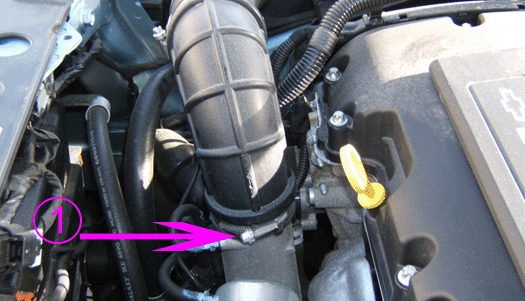
- Loosen the clamp (1) on the turbocharger rubber outside air inlet duct.
- Remove the turbocharger rubber outside air inlet duct.
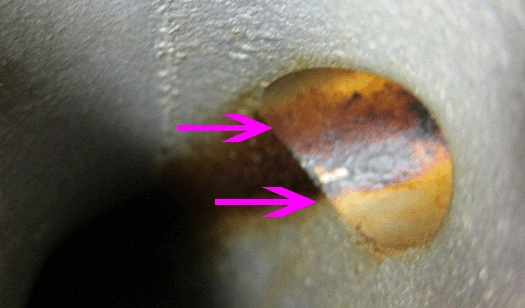
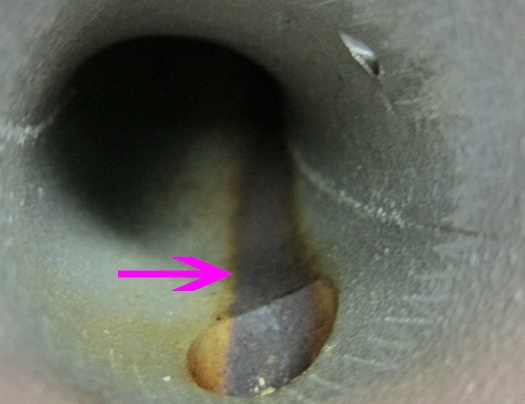
Notice: The views shown in the graphics are for identifying NORMAL oil staining in the opening for the PCV fresh air intake hose and the stain travel into the turbocharger bore and DO NOT represent an oil leak.
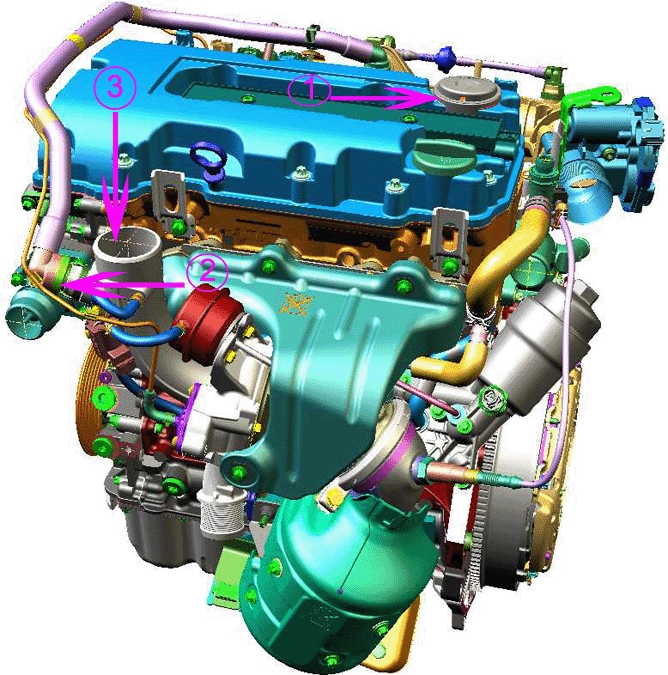
- Inspect the inside of the turbocharger outside air inlet tube (3) for oil leaking into the opening in the turbocharger bore for the PCV fresh air intake hose.
- If oil is leaking into the opening in the turbocharger bore for the PCV fresh air intake hose, proceed to Step 8.
- If oil is not leaking into the opening in the turbocharger bore for the PCV fresh air intake hose, proceed to Step 10.
- If oil is leaking into the opening in the turbocharger
- Remove the PCV fresh air intake hose (2), from the turbocharger outside air inlet tube (3).
- Inspect the inside of the PCV hose for oil.
- Inspect the turbocharger oil feed pipe for leaks, restrictions, damage or blockage. Refer to Turbocharger Oil Feed Pipe Replacement in Service Information.
- Inspect the turbocharger oil return pipe for leaks, restrictions, damage or blockage. Refer to Turbocharger Oil Return Pipe Replacement in Service Information.
- Inspect for the presence of oil in the exhaust system.
- If oil is present in the exhaust system, then inspect the turbocharger for an oil leak.
- If oil is present in the exhaust system, then inspect the turbocharger
Turbochargers – Noise
If the condition is noise, in order to identify the cause, perform the following as needed:
- Understand and verify the customer concern. Perform the Diagnostic System Check – Vehicle and utilize Strategy Based Diagnosis.
- To help isolate the source of the noise, use chassis ears J-39570 or SA9217NE or an equivalent in the following areas:
- The air conditioning (A/C) system. Refer to Noise Diagnosis – Air Conditioning (A/C) System in Service Information.
- The transmission. Refer to the following in Service Information:
- Noise and Vibration Analysis.
- Torque Converter Diagnosis.
- Whine/Growl Noise.
- The generator. Refer to Generator Noise Diagnosis in Service Information.
- The engine. Refer to the following in Service Information:
Cracks in the Turbocharger Wastegate Valve Port Area
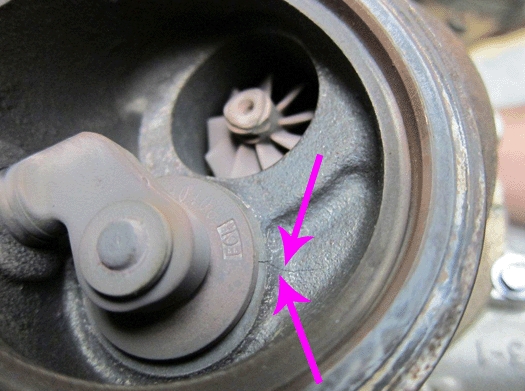
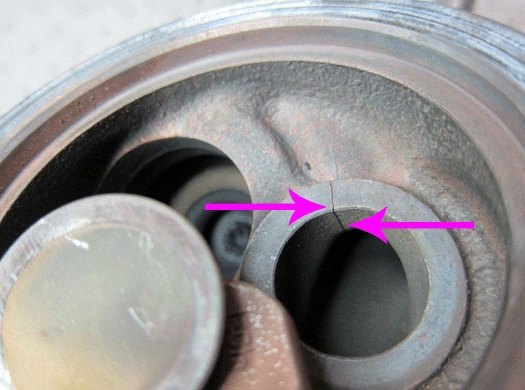
The presence of cracks in the turbocharger wastegate valve port area is considered a normal condition, and will not affect the performance of the turbocharger. DO NOT replace the turbocharger for this condition.
Turbocharger Replaced – Inspection to Perform
When a turbocharger replacement is deemed necessary, it is critical that the turbocharger oil feed pipe and turbocharger oil return pipe are inspected for any leaks, restrictions, damage or blockage. Refer to Turbocharger Oil Feed Pipe Replacement and Turbocharger Oil Return Pipe Replacement in Service Information.
SEOCONTENT-END
Bulletin No.: PI0675B
Date: Jan-2015
To View or Download this Document Click Here
Bulletin No.: PI0675
Date: February, 2012
To View or Download this Document Click Here
- Formulated for engines with 75,000 miles or more, Valvoline MaxLife High Mileage synthetic blend is formulated with seal conditioners to help prevent oil leaks and reduce oil consumption
- Delivers 20% better wear protection and 15% better sludge defense than industry standards to help prevent engine breakdown
- Extra detergents safeguard against friction, corrosion and deposits to keep high-mileage engines clean
- Advanced friction-fighting additives help maximize performance and improve fuel efficiency
- Provides performance benefits for high mileage, new and re-built engines alike


- Phosphorus Replacement Technology helps extend emission system life
- Superior dispersancy that fights sludge build up
- Exceptional oil burn-off protection exceeding industry standards* | Seal conditioners to help reduce leaks
- Advanced additives that help prevent engine wear | Improved Fuel Economy**
- Meets or exceeds the following specifications: API SP/SN PLUS/SN/SM | ILSAC GF-6 | Meets Ford WSS-M2C946-B1 | Meets Ford WSS-M2C961-A1 | * Based on API and ACEA volatility specifications | ** In 5W-20, 5W-30 and 10W-30 grades versus industry specifications
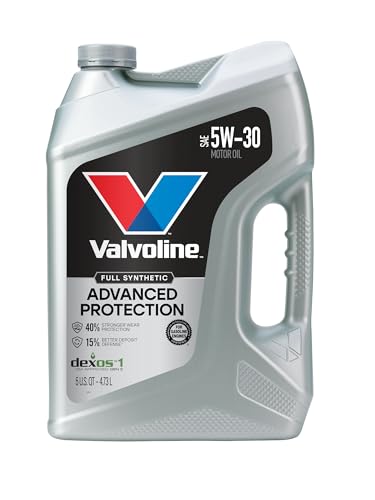
- Advanced protection against the four main causes of engine breakdown: wear friction heat and deposits
- Delivers 40% stronger wear protection than industry standards to reduce friction and improve fuel economy
- Provides 15% better deposit defense vs. industry standards, keeping engines cleaner for smoother performance and longer-lasting protection
- Up to 2.5X better heat protection vs. industry standards to fight harmful sludge formation and thermal breakdown
- Engineered for excellent low-temperature flow, reducing metal-to-metal contact during cold starts — when most engine wear typically occurs

- 6X better wear protection on critical engine parts than industry standards**
- 1.3X better sludge protection than industry standards*
- 3X Stronger against viscosity breakdown than leading full synthetic^
- Protection for 10,000 miles between oil changes
- As measured in Sequence VH sludge test vs. API SP limits
This product presentation was made with AAWP plugin.