
NHTSA ID Number: 10161040
Manufacturer Communication Number: PIP5652
Summary
This Preliminary information communicates the possibility of a rattle noise that can occur from the timing cover area due to sticking timing chain tensioner.
1 Affected Product
Vehicle
| CADILLAC | XT4 | 2019 |
SEOCONTENT-START
Bulletin No.: PIP5652
Published date: 05/21/2019
Preliminary Information
PIP5652 Rattle Noise From Front of Engine
Proactive Models
ars:
VIN:
from to
Cadillac XT4 2019
All All 2.0 LSY All
Involved Region or Country: North America and…
Condition: Rattle noise from front of engine
Cause: Timing chain tensioner may be stuck or collapsed
If you encounter a vehicle with a rattle noise from the front of the engine, this may be caused by
a stuck or collapsed timing chain tensioner allowing the timing chain to be loose.
Remove the lower engine front cover assembly and inspect the timing chain tensioner for possibly
being stuck.
Photo below shows a stuck timing chain tensioner plunger allowing an air gap to be present between
the tensioner plunger and timing chain guide.
Photo below shows the timing tensioner removed from engine. Note the plunger is stuck in body of
tensioner.
If you find the above issue replace the timing chain tensioner using published Service Information
and evaluate.
Warranty Information
For vehicles repaired under the Powertrain coverage, use the following labor operation. Reference
the Applicable Warranties section of Investigate Vehicle History (IVH) for coverage information.
Labor Operation: Description
Labor Time:
4063990 Replace Timing
Chain Tensioner Use Published Labor Time
Version History
Version 1
Modified 05/21/2019 – Created on
SEOCONTENT-END
Bulletin No.: PIP5652
Published date: 05/21/2019
To View or Download this Document Click Here
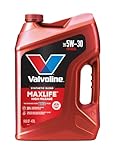
- Formulated for engines with 75,000 miles or more, Valvoline MaxLife High Mileage synthetic blend is formulated with seal conditioners to help prevent oil leaks and reduce oil consumption
- Delivers 20% better wear protection and 15% better sludge defense than industry standards to help prevent engine breakdown
- Extra detergents safeguard against friction, corrosion and deposits to keep high-mileage engines clean
- Advanced friction-fighting additives help maximize performance and improve fuel efficiency
- Provides performance benefits for high mileage, new and re-built engines alike


- Phosphorus Replacement Technology helps extend emission system life
- Superior dispersancy that fights sludge build up
- Exceptional oil burn-off protection exceeding industry standards* | Seal conditioners to help reduce leaks
- Advanced additives that help prevent engine wear | Improved Fuel Economy**
- Meets or exceeds the following specifications: API SP/SN PLUS/SN/SM | ILSAC GF-6 | Meets Ford WSS-M2C946-B1 | Meets Ford WSS-M2C961-A1 | * Based on API and ACEA volatility specifications | ** In 5W-20, 5W-30 and 10W-30 grades versus industry specifications

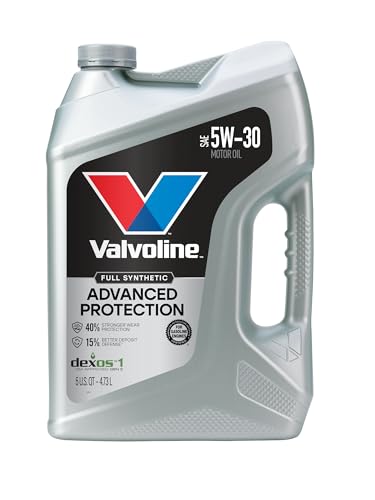
- Advanced protection against the four main causes of engine breakdown: wear friction heat and deposits
- Delivers 40% stronger wear protection than industry standards to reduce friction and improve fuel economy
- Provides 15% better deposit defense vs. industry standards, keeping engines cleaner for smoother performance and longer-lasting protection
- Up to 2.5X better heat protection vs. industry standards to fight harmful sludge formation and thermal breakdown
- Engineered for excellent low-temperature flow, reducing metal-to-metal contact during cold starts — when most engine wear typically occurs
This product presentation was made with AAWP plugin.